

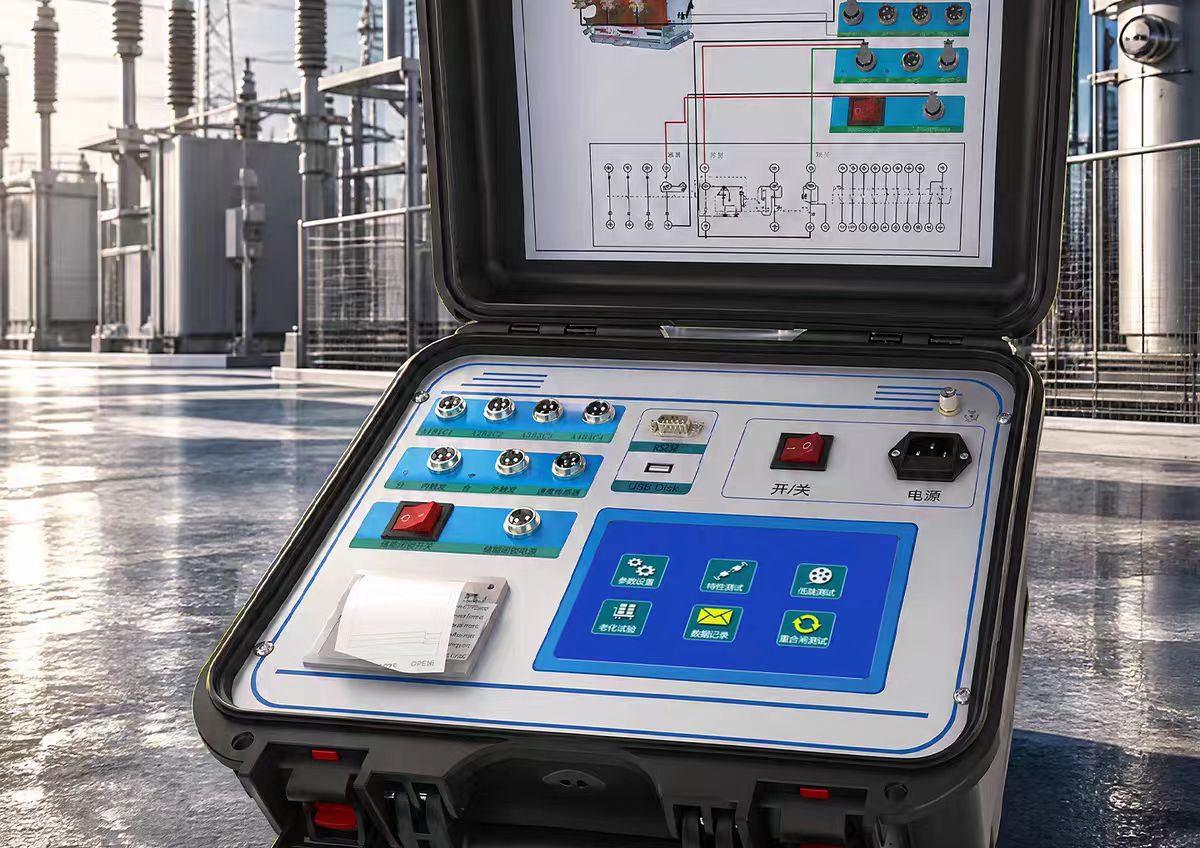
At substation maintenance sites, technical engineers often encounter a problem: for the same zinc oxide arrester, the U1mA and resistive current results differ when measured with different testers. Such differences may come from the reference voltage sampling method, the degree of sensor isolation, and the separation algorithm for total current and resistive current. HZ-MOA300 has been designed at both the hardware and algorithm levels for these links, making it easier for engineers to judge data validity during comparison.
Some traditional solutions use a split-type structure, in which there is no complete isolation between voltage sampling and current sampling. On-site induced voltage and leakage current couple with each other, causing the resistive current component at 0.75U1mA to fluctuate greatly. HZ-MOA300 adopts a safety isolation design. The voltage and current sensors inside the instrument are completely isolated, and only low voltage is used inside the main unit. This structure reduces crosstalk between channels and synchronously collects leakage current during the voltage rise. The measurement range of the initial operating voltage U1mA is 0–1999 V, and the total current measurement range is 1 mA–10 mA (expandable).
The operating temperature is 0–+40°C, and the humidity conditions meet the conventional requirements of substation sites. Measurement items include U1mA, the resistive current component at 0.75U1mA, and total current. It is suitable for live-line detection or de-energized verification of 10 kV–500 kV zinc oxide arresters and surge protective devices, and can also be used for laboratory retesting of arrester characteristics. For maintenance tasks that require recording multiple sets of data, the instrument supports storage and recall of measurement results, reducing on-site manual recording errors.
When the results of multiple instruments are inconsistent, it is recommended to first check the reference voltage sampling point and grounding method, and then compare the separation conditions of total current and resistive current. The handling of insulation isolation and low-voltage main unit design in HZ-MOA300 provides engineers with a reproducible comparison benchmark, making it easier to judge the arrester condition rather than relying solely on a single reading.

