Zinc Oxide Arrester Tester
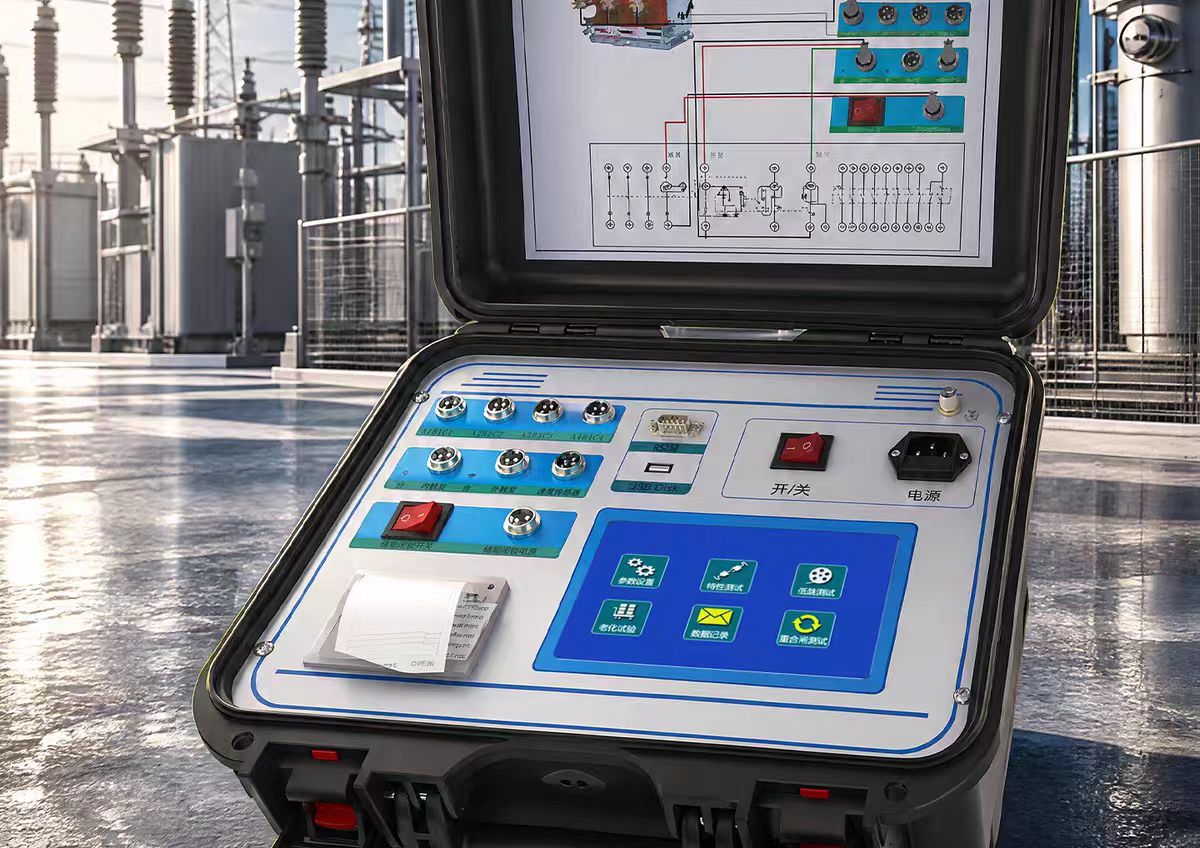
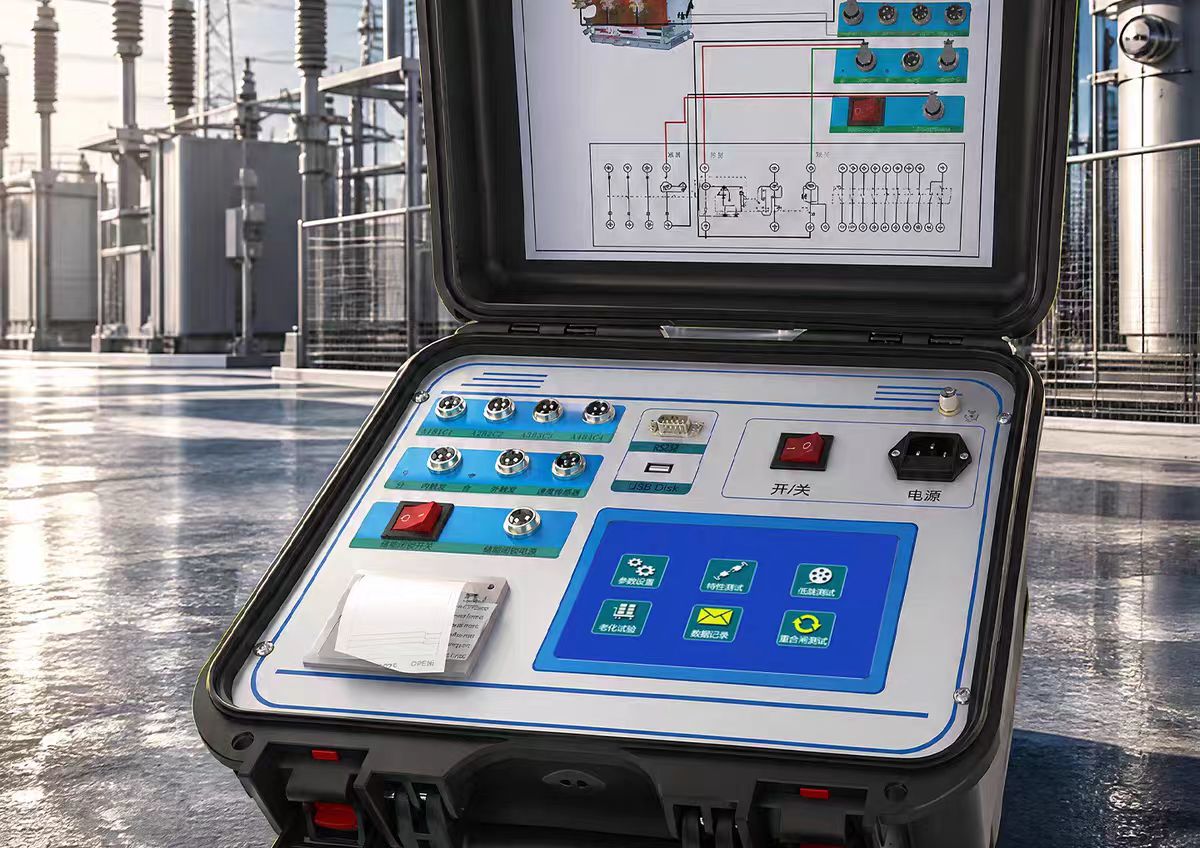
The zinc oxide arrester tester is an instrument specifically used to detect the electrical performance of zinc oxide arresters (MOA). Its core objective is to evaluate whether the internal valve blocks are aged or the insulation is damp, thereby timely discovering potential defects and ensuring the safety of the power grid. It can be used for preventive tests after equipment outage and also supports live detection under normal operating voltage.
Core Principle and Key Indicators
Under normal operating voltage, the zinc oxide arrester mainly conducts a weak capacitive current. When the valve blocks age or the interior becomes damp, its nonlinear volt-ampere characteristics deteriorate, causing a significant increase in the resistive current component.
Therefore, the core task of the tester is to accurately separate and measure the resistive current and its harmonic content from the total current containing both capacitive and resistive components. Monitoring only the total current often masks early minor defects, while the resistive current is the most direct and sensitive indicator for judging the health status of the arrester.
Main Functions and Measurement Parameters
Modern zinc oxide arrester testers typically have the following functions:
Total current measurement: Measures the fundamental RMS value, peak value, and true waveform of the leakage current.
Resistive current analysis: This is the most critical function, capable of measuring the fundamental, 3rd, 5th, 7th, and 9th harmonic RMS values and positive/negative peak values of the resistive current.
Capacitive current measurement: Measures the fundamental capacitive current for auxiliary analysis.
Voltage parameters: Measures the power frequency reference voltage and its harmonics, voltage RMS value, and voltage waveform.
Phase and power consumption: Measures the phase difference between voltage and current, active power, etc.
Waveform display: Large screen real-time display of true voltage and current waveforms for intuitive judgment.
Key Technologies and Synchronization Methods
Since the instrument needs to obtain the system voltage as a reference basis during live testing to calculate phase and separate resistive components, the voltage synchronization method is one of the core technologies of the instrument.
Table
Download as Table
Export as Image
Synchronization Method Principle and Characteristics Applicable Scenarios
Wired Synchronization Obtains voltage signals directly from the secondary side of the voltage transformer (PT) via test leads. High accuracy, but wiring is cumbersome. Outage tests or sites with convenient PT secondary terminals.
Wireless Synchronization The voltage acquisition unit obtains signals from the PT secondary side and transmits data to the host via wireless methods (such as 485, Bluetooth). Eliminates long-distance wiring, safe and convenient. Live inspection in substations, especially suitable for scenarios where PT terminals are located at higher positions.
Induction Plate Synchronization No contact with PT; the induction plate is placed near the arrester base (usually phase B), and the voltage reference signal is obtained by sensing the electric field strength. When PT signals cannot be obtained on site, or for live testing pursuing ultimate safety and efficiency.
No Voltage Synchronization Does not collect any external voltage signals; relies entirely on software algorithms to estimate the voltage reference by analyzing the phase relationship of three-phase currents. Emergency situations where site conditions are extremely limited and no voltage signal can be obtained.
Mainstream Product Features
Strong anti-interference capability: Uses high-speed sampling, digital filtering, harmonic analysis, and other software algorithms to effectively overcome on-site corona and inter-phase interference, ensuring accurate extraction of resistive current.
Three-phase simultaneous measurement: Supports simultaneous testing of three-phase voltage and current, automatically performs angle compensation, greatly improving test efficiency, and can correctly measure the resistive current of side-phase arresters affected by the middle-phase interference.
Portability and safety: Generally powered by built-in high-energy lithium batteries, no external power supply needed; the instrument is designed with low-voltage internal circuits, and sensors are fully isolated to ensure operator safety.
Data management: Supports mass data storage, USB export, Bluetooth transmission to mobile phones or tablet apps, and can print on-site or generate Word-format test reports.
Market and Manufacturer Overview
The domestic zinc oxide arrester tester market is relatively mature, with many manufacturers offering products with similar functions, mainly differing in portability, synchronization methods, software algorithms, and user experience.
Wuhan Moen Intelligent Electric (MOEORW/Fankester): Rich product line, such as MEYB-BS, MEYB-C2 models, emphasizing three-phase simultaneous measurement, wireless synchronization, and Bluetooth APP control.
Wuhan UHV: Representative model UHV-543, focusing on digital waveform analysis technology and anti-interference capability, supporting multiple synchronization methods.
Wuhan Hertz Electric: Provides HZYHX series, comprehensive functions, supports induction plate synchronization and mass data storage, emphasizing convenience for field applications.
Wuhan Binghua Network Electric (BHW): Focuses on handheld comprehensive testers, emphasizing extreme portability (host only 1kg), high-precision sampling, and intelligent voltage collectors, suitable for high-frequency inspections.
Yi Tiancheng: Representative model YTC620H, features include 7-inch touch screen, ultra-long-distance wireless synchronization (up to 5000 meters), and powerful anti-interference calculation functions.
Selection Suggestions
When selecting, it is recommended to focus on the following points:
Synchronization method: Choose the most appropriate synchronization method based on your actual site conditions (whether PT terminals are available, whether wiring is allowed, whether efficiency is pursued). Wireless and induction plate synchronization have obvious advantages in live testing.
Anti-interference capability: Ask manufacturers how their software algorithms handle inter-phase interference and on-site noise, as this is key to ensuring data accuracy.
Portability and battery life: For scenarios requiring frequent field inspections, handheld design and long-lasting lithium batteries are important considerations.
Data management: Whether it supports Bluetooth, APP, USB export, and automatic report generation, which directly affects the efficiency of later data analysis and report preparation.
Implementation standards: Confirm whether the product complies with the latest power industry standards such as DL/T 474.5.