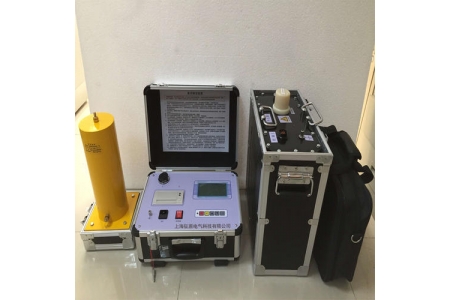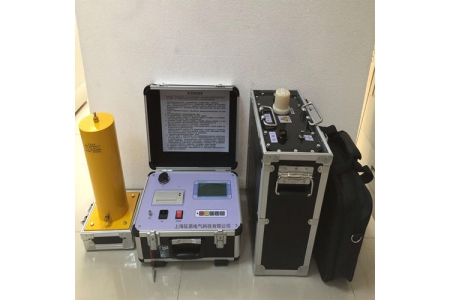
Zinc Oxide Arrester Tester
The Zinc Oxide Arrester Tester (also known as Arrester Resistive Leakage Current Tester, Intelligent Arrester Characteristics Tester) is a specialized instrument designed for detecting the electrical performance of zinc oxide arresters (MOA). It can accurately assess the operational health of arresters under live or de-energized conditions, making it an essential tool for ensuring the safe operation of power grids.
Core Working Principle
The primary purpose of the Zinc Oxide Arrester Tester is to analyze whether the internal valve blocks are aged or the insulation is damp by measuring the leakage current of the arrester. Modern instruments mainly adopt the following technical principles:
Signal Acquisition and Isolation: The leakage current signal is obtained through a wireless current clamp or by connecting to the arrester counter, while the voltage reference signal is obtained through PT secondary voltage sampling or no-voltage software simulation. The instrument uses high-speed magnetic isolation digital sensors internally to ensure complete isolation between voltage and current signals, ensuring operational safety and data reliability.
Digital Waveform and Harmonic Analysis: The instrument employs Fast Fourier Transform (FFT) and digital filtering technology to perform high-speed sampling and anti-interference processing on the acquired signals. It can accurately separate and analyze the fundamental wave and the content of 3rd to 9th harmonics, thereby precisely calculating the resistive current and its harmonic components.
Intelligent Anti-interference and Compensation: In response to the complex electromagnetic environment at high-voltage sites, the instrument is equipped with anti-interference calculation and angle compensation functions, effectively overcoming phase-to-phase interference effects, ensuring accurate measurement of the resistive current of side-phase arresters even at voltage levels of 220kV and above.
Main Functions and Detection Capabilities
Multi-parameter Comprehensive Measurement: It can comprehensively measure key parameters such as total current (fundamental RMS value and peak value), resistive current (including positive and negative peak values and various harmonics), capacitive current, power frequency reference voltage, active power, and phase difference.
Flexible Sampling Methods:
Voltage Sampling: Supports wired synchronization, wireless synchronization, induction plate synchronization (electric field strength sampling), and no-voltage software simulation, adapting to various field conditions.
Current Sampling: Supports connecting to both ends of the arrester counter or using a wireless current clamp to directly clamp the grounding wire current.
Three-phase Simultaneous Testing: Supports simultaneous testing of three-phase current and voltage with automatic compensation calculation, greatly improving field work efficiency; it also supports single-phase or two-phase testing.
Data Management and Interaction: Equipped with a high-definition color touch screen, it can display real-time waveforms of voltage and current. It supports mass data storage, U-disk export of Word reports, and some devices also support Bluetooth connection to mobile phones or tablets for data upload and remote control.
Typical Application Scenarios
On-site Live Detection: Suitable for online monitoring of zinc oxide arresters at voltage levels from 6kV to 500kV, without power outage or pole climbing, enabling timely detection of dangerous defects such as internal insulation dampness and valve block aging.
De-energized Preventive Tests: Before the thunderstorm season or during equipment maintenance, comprehensive electrical performance tests are conducted with power outage to assess the health status of arresters.
Laboratory Factory and Acceptance Tests: Used for factory inspection by zinc oxide arrester manufacturers and handover acceptance tests by power construction units. Key Selection Indicators
Table
Download as Table
Export as Image
Consideration Dimension Key Parameter Selection Suggestion
Applicable Voltage Level Test Range Should cover the voltage level of on-site equipment (e.g., 6kV-500kV), ensuring the instrument's range matches
Measurement Accuracy Error Range When total current >100μA, prefer equipment with error within ±5% reading ±1 digit
Anti-interference Capability Compensation and Filtering Technology For on-site live testing, models with phase-to-phase interference compensation, angle compensation, and digital filtering functions must be selected
Synchronous Sampling Method Voltage/Current Sampling Prioritize models supporting wireless synchronization and induction plate sampling to greatly reduce on-site wiring difficulty and safety risks
Portability and Battery Life Power Supply and Weight For outdoor operations, choose equipment with built-in large-capacity lithium battery, AC/DC dual-use, and equipped with dustproof and anti-corrosion integrated box
Usage Precautions
Reliable Grounding: Before testing, the instrument's grounding terminal must be reliably connected to the grounding grid, and the grounding point should have good conductivity; otherwise, measurement accuracy may be affected or personal safety may be endangered.
Safe Wiring: When taking reference voltage from the PT secondary side, operate carefully to prevent short circuit of the PT secondary side; when using current clamps or wiring clips, ensure good contact.
Continuity Test: After wiring, it is recommended to perform a continuity test to confirm the circuit connection is correct before starting formal measurement.
Standard Operation: Strictly comply with relevant safety regulations in the power industry; personnel should maintain a safe distance during testing, and after testing, remove wiring and organize equipment promptly.