

The IEC 60270 standard specifies the pulse current method as the reference method for apparent discharge magnitude measurement, with a detection frequency range of 10kHz to 300kHz and sensitivity up to 0.02pC to 0.1pC. For design and selection personnel, it is necessary to clarify the type of equipment under test and the purpose of detection: for internal discharge in GIS, the UHF method (300MHz to 3GHz) should be used; for external detection of transformers and switchgear, the ultrasonic method (20kHz to 300kHz) can be selected; for online monitoring of cables, the HF current method (100kHz to 100MHz) is suitable. The UHF-7500 partial discharge detector supports multiple sensor connections, covering the above mainstream detection technologies for cross-verification.
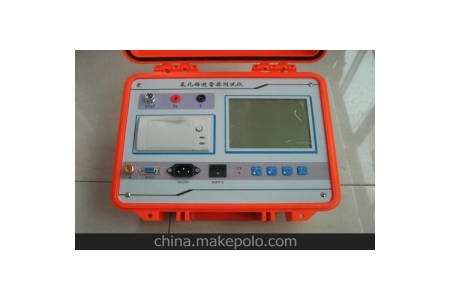
For GIS equipment, the UHF-7500 can be connected to an external UHF antenna, utilizing its strong anti-interference capability to penetrate the metal enclosure and detect internal discharge. For switchgear, the transient earth voltage method (3MHz to 100MHz) induces pulse voltage on the cabinet surface and is easy to install; meanwhile, an ultrasonic probe can be used to locate the discharge point. Acoustic imaging technology can superimpose the sound source position on the optical image to achieve visualized rapid positioning. The detection host is equipped with a touch screen and supports internal synchronization, external synchronization, and wired/wireless synchronization, with a phase accuracy of ≤0.1°, meeting the needs of on-site live detection.
For transformer detection, it is recommended to use an ultrasonic probe (AE/UA), which is immune to electromagnetic interference and excels at locating discharge points. For online cable monitoring, the HF current method (HFCT) can be used, clamp-mounted on the cable grounding wire, with a detection frequency range of 100kHz to 100MHz. The UHF-7500 offers optional sensor sets, including UHF antennas, ultrasonic probes, TEV sensors, HFCT clamp-on current transformers, etc., allowing users to configure flexibly according to the equipment under test. A calibration pulse generator is used for system sensitivity calibration to ensure measurement consistency.
The UHF-7500 has a sampling rate of 100MS/s to 2GS/s, with selectable sampling accuracy of 8Bit/12Bit/14Bit/16Bit, a dynamic range up to 120dB, and a linearity error of ≤±10%. The data analysis software can generate PRPD/PRPS spectra and supports automatic identification of discharge types and trend analysis. In terms of detection sensitivity, the pulse current method can reach 0.02pC to 0.1pC, the UHF/TEV/HFCT methods ≤0.5pC to 1pC, and the acoustic imaging positioning accuracy can reach <1°. These parameters provide a quantitative basis for design and selection.
Design and selection personnel should determine the required combination of detection technologies based on the type of equipment under test, detection purpose, and on-site conditions. The UHF-7500 partial discharge detector supports multi-technology fusion and is suitable for partial discharge detection of GIS, transformers, switchgear, cables, and other equipment. The specific configuration requires selecting sensors and synchronization methods according to actual needs.

