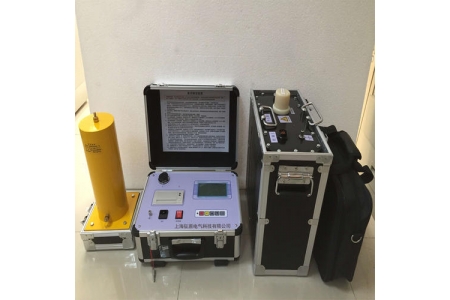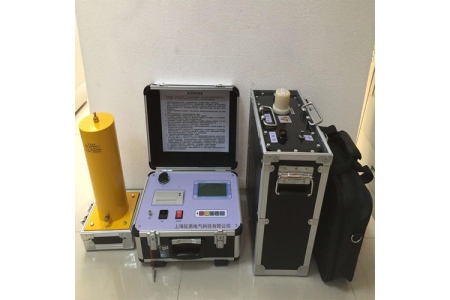
Partial Discharge Detector
A partial discharge detector (PD detector for short) is an insulation operation supervision instrument used to detect insulation defects in high-voltage electrical equipment. By capturing various physical signals generated by partial discharge, such as electromagnetic waves, ultrasonic waves, and transient earth voltage, it achieves quantitative testing and localization of the insulation condition of equipment including transformers, GIS, switchgear, cables, instrument transformers, and surge arresters. It is one of the core tools for the power system's transition from "periodic maintenance" to "condition-based maintenance."
What Is Partial Discharge
Partial discharge (PD) refers to localized dielectric discharge that occurs in a localized region of a solid or liquid electrical insulation system under high-voltage field stress. Tiny bubbles, cracks, and metal impurities within the insulation, under long-term high-voltage electric field action, can trigger imperceptible partial discharge. The energy of this discharge is weak in the early stage, yet like "termites eating wood," it erodes the insulation structure day after day. Over time, it can easily induce insulation breakdown of the equipment and even cause large-scale power outage accidents.
Detection Principles (Multi-Technology Fusion)
Modern PD detectors typically integrate multiple detection technologies, improving the detection rate and localization accuracy through signal complementarity:
Pulse Current Method (ERA Method) Broadband Picks up the discharge pulse current signal through a coupling capacitor or high-frequency current transformer, and measures the apparent discharge quantity (pC) Complies with IEC 60270 standard, enables quantitative measurement, with sensitivity up to 0.02pC
Ultra-High Frequency Method (UHF) 300MHz~3GHz Collects the UHF electromagnetic wave signal generated at the instant of discharge Strong anti-interference capability, can penetrate metal enclosures, suitable for internal discharge detection in enclosed equipment such as GIS
Ultrasonic Method (AE/UA) 20kHz~300kHz Captures the mechanical vibration sound waves generated by discharge through piezoelectric sensors Not affected by electromagnetic fields, suitable for precise localization of discharge points
Transient Earth Voltage Method (TEV) 3MHz~100MHz Detects transient potential changes induced on metal enclosures Easy to install, suitable for live detection of metal-enclosed equipment such as switchgear
High-Frequency Current Method (HFCT) 100kHz~100MHz Detects pulse current in grounding wires or cable shielding layers through high-frequency current transformers Suitable for online monitoring of cables
Acoustic Imaging Technology Ultrasonic frequency band Uses microphone arrays to convert acoustic signals into visual images overlaid on optical images Non-contact rapid localization, intuitively displays discharge points like a "thermal imager"
Instrument Types
PD detectors are divided into three major categories by usage mode:
Handheld Portable Type
Small size, light weight (0.25kg~3.5kg), built-in battery power supply, can be operated by one person handheld
Integrates multiple detection technologies such as UHF, AE, TEV, HFCT, and infrared, one machine with multiple uses
Supports Wi-Fi/mobile network cloud connection, real-time data upload and intelligent diagnosis
Suitable for scenarios such as daily inspection, troubleshooting, and handover testing
Limitation: Cannot achieve 24-hour continuous monitoring, prone to missed detection of intermittent and sporadic discharge defects
Benchtop Detection System
Composed of a main unit, multi-channel sensors, synchronization unit, calibration pulse generator, and analysis software
High detection sensitivity, supports multi-channel synchronous acquisition and advanced spectrum analysis
Suitable for high-precision detection scenarios such as laboratories, factory tests, and on-site acceptance tests
Representative products include the OMICRON MPD 800 universal PD measurement and analysis system, which supports IEC 60270 standard measurement and can be used with the UHF 800 UHF system and PDL 650 ultrasonic localization system
Online Monitoring System
Composed of sensor arrays, acquisition devices, power-frequency phase transformers, and background analysis software
7×24-hour uninterrupted signal acquisition, transmitted back to the cloud centralized control center through the Internet of Things
Supports remote diagnosis, intelligent early warning, and trend prediction
Suitable for long-term condition monitoring of unattended substations and important equipment
Representative products include the OMICRON MONTESTO 200 mobile temporary online monitoring system, with protection rating IP65, supporting remote data access and email alarms
Core Functions
Multi-channel synchronous acquisition: Supports simultaneous acquisition by multiple sensors, with inter-channel synchronization time up to ≤1ns
PRPD/PRPS spectrum analysis: PRPD (Phase Resolved Partial Discharge) presents the correlation between discharge pulse amplitude and power-frequency voltage phase in two-dimensional form; PRPS (Phase Resolved Partial Discharge Sequence) adds a time dimension, fully restoring the variation pattern of discharge characteristics over time
Automatic discharge type identification: Combined with AI algorithms to automatically identify typical discharge types such as free metal particles, floating potential bodies, insulation voids, metal protrusions, and corona discharge
Digital filtering and noise separation: Achieves high-sensitivity measurement in strong interference environments, automatically separating PD signals from environmental noise
Acoustic imaging localization: Overlays discharge points as highlighted spots on optical images, enabling non-contact rapid localization, with localization accuracy from <1cm to ≤1m
Data storage and report generation: Supports on-site printing, USB drive export, and USB/Bluetooth upload to a computer for generating professional reports
Detection sensitivity Pulse current method can reach 0.02pC~0.1pC; UHF/TEV/HFCT can reach ≤0.5pC~≤1pC under laboratory conditions
Sampling rate Up to 2GS/s, commonly 100MS/s~200MS/s
Sampling accuracy 8-bit, 12-bit, 14-bit, or 16-bit
Testable specimen capacitance 6pF~250μF
Amplifier frequency band Low end selectable at 10kHz/20kHz/40kHz, high end selectable at 100kHz/200kHz/300kHz
Localization accuracy Acoustic imaging or UHF/AE fusion localization can reach <1cm to ≤1m
Phase accuracy ≤0.1°
Synchronization mode Internal synchronization, external synchronization, wired and wireless synchronization
Operating temperature -20℃~+50℃
Relative humidity 0%~90%RH
Applicable Equipment and Application Scenarios
Equipment Under Test Recommended Detection Method Typical Scenario
High-voltage switchgear/center-mounted cabinets TEV + AE + UHF Substations, switching stations, distribution rooms
Power transformers UHF + AE + HFCT Power plants, substation main transformers
GIS combined apparatus UHF dedicated sensor High-voltage substation GIS rooms
High-voltage power cables HFCT Online monitoring of cable joints and terminations
Generators/motors UHF + AE Power plants, large industrial and mining enterprises
Instrument transformers/bushings/surge arresters UHF + AE Substation equipment inspection
Insulators/high-voltage lines Acoustic imaging Live-line inspection of transmission lines
Executive Standards
IEC 60270: Partial discharge measurement (international standard)
IEC 62478: Partial discharge detection of high-voltage equipment
GB/T 7354: Partial discharge measurement (national standard)
DL/T 846 series: General technical conditions for partial discharge detectors
DL/T 417: Technical guidelines for live partial discharge detection of power equipment
Selection Recommendations
Daily inspection/troubleshooting: Choose a handheld portable multi-function detector integrating TEV+AE+UHF multi-sensors, operable by one person, suitable for batch inspection of distribution station rooms
Factory tests/handover acceptance: Choose a benchtop high-precision detection system (such as OMICRON MPD 800), compliant with IEC 60270 standard, supporting multi-channel synchronous acquisition and advanced spectrum analysis
Internal defect localization in transformers: Choose a UHF+AE fusion solution, paired with an ultrasonic localization system (such as PDL 650), which can precisely display the discharge position in a 3D model
GIS equipment detection: Choose a UHF dedicated sensor solution, with strong anti-interference capability, able to penetrate metal enclosures to detect internal discharge
Long-term monitoring of important equipment: Choose an online monitoring system, supporting 7×24-hour uninterrupted acquisition, remote access, and intelligent early warning
Rapid localization of discharge points: Choose an acoustic imager (such as Fluke ii1050C), which overlays discharge points as visualized spots on optical images, with a detection distance of up to 120 meters and a body weight of only 1.2kg