Partial Discharge Detector
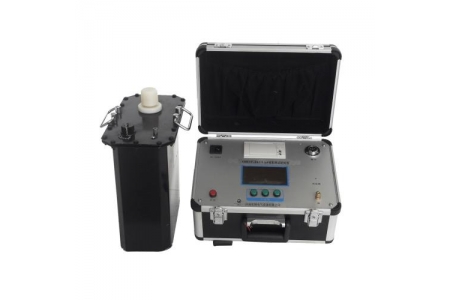
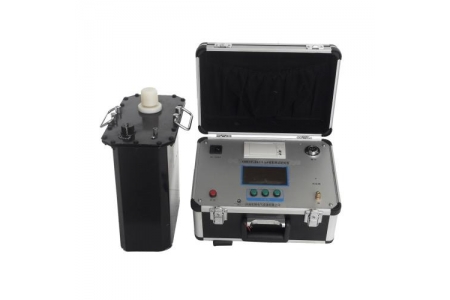
Partial Discharge Detector (PD Detector) is the "invisible guardian" for insulation operation monitoring of high-voltage electrical equipment. Partial Discharge (PD) refers to the discharge phenomenon occurring in localized areas of the insulation system of electrical equipment, which is an early sign of insulation deterioration. The instrument detects various physical signals generated by partial discharge, identifying insulation defects before severe faults (such as breakdown) occur, thereby preventing unexpected power outages and ensuring the safe and stable operation of the power system.
Core Working Principle and Mainstream Detection Methods
When partial discharge occurs, it generates various physical and chemical effects such as electrical pulses, high-frequency electromagnetic waves, ultrasonic waves, optical radiation, and specific gases. The detector diagnoses by capturing these signals. Currently, mainstream detection technologies include:
Pulse Current Method (ERA Method): Based on high-frequency pulse current measurement, it is the standard method of the International Electrotechnical Commission (IEC 60270). It can quantitatively measure apparent discharge quantity with extremely high sensitivity (up to 0.02pC) and is the most widely used.
Ultra-High Frequency Method (UHF): Detects electromagnetic wave signals in the 300MHz-3GHz frequency band. It has strong resistance to low-frequency electromagnetic interference and can penetrate metal equipment enclosures, making it particularly suitable for internal discharge detection and location in enclosed equipment such as GIS (Gas Insulated Switchgear).
Acoustic Emission Method (AE): Detects mechanical vibration acoustic waves of 20kHz-300kHz. This method is completely immune to electromagnetic field interference and has significant advantages in determining the specific physical location of discharge. It is often combined with UHF for acoustic-electric joint location.
Transient Earth Voltage Method (TEV): Detects transient earth voltage signals (3-100MHz) induced on the surface of metal enclosures (such as switchgear) by internal discharges. Sensors can be attached to the cabinet body for measurement, making it a standard tool for live inspection of switchgear.
High-Frequency Current Transformer Method (HFCT): Detects pulse currents in grounding wires or cable shielding layers by clamping high-frequency current transformers. Signals can propagate over long distances along cables, making it the preferred choice for online monitoring of high-voltage cables and rotating machines.
Modern high-end detectors typically adopt multi-sensor fusion technology, integrating the above methods into one device, and significantly improving diagnostic accuracy through cross-validation of data.
Main Functions and Features
Intelligent Spectrum Analysis: Built-in high-performance digital processing chip converts abstract signals into intuitive PRPD (Phase Resolved Partial Discharge) and PRPS (Phase Resolved Pulse Sequence) spectra. Combined with AI algorithms, it can automatically identify typical discharge types such as corona, floating potential, and insulation voids.
Acoustic Imaging Location: Some advanced devices are equipped with acoustic imaging technology, using microphone arrays to convert ultrasonic signals into visual images, superimposed in real-time on optical images, enabling non-contact rapid and precise location of discharge points.
Multi-Scenario Adaptation: Product types include handheld portable, desktop multifunctional systems, and fixed online monitoring systems. Portable devices are lightweight with long battery life, suitable for field inspections; online monitoring systems support 7×24-hour continuous data collection and remote cloud diagnostics.
Anti-Interference and Data Management: Equipped with digital filtering and noise separation functions, capable of stable operation in complex electromagnetic environments; supports massive data storage, playback, and automatic generation of professional inspection reports.
Main Application Fields
Partial discharge detectors are widely used in type tests, factory tests, commissioning tests, and routine live inspections and online monitoring of various high-voltage electrical equipment:
Gas Insulated Switchgear (GIS/GIL): Detection of internal conductor burrs, free particles, and insulator surface discharge.
Power Transformers/Reactors: Detection of discharge faults in windings, cores, insulating oil, and bushing defects.
Switchgear (10kV/35kV): Screening of early hazards such as insulation component cracks, poor contact, contamination, and moisture.
High-Voltage Power Cables: Monitoring of insulation aging, water tree aging, and construction damage in cable bodies and joints.
Other Equipment: Instrument transformers, surge arresters, capacitors, and large rotating machines.
Representative Brands and Manufacturers
There are many manufacturers of PD detectors in the market, covering various needs from high-precision analysis to multifunctional integration:
Beijing Kanggaote: Rich product line, focusing on multi-mode fusion. Its "Nezha" multifunctional PD tester integrates multiple sensors such as UHF, TEV, AE, and HFCT, supporting mobile APP control and cloud platform data upload; the "Zilong" series focuses on high-sensitivity cable PD detection; the "Mengde" series is compatible with various voltage sources such as ultra-low frequency and power frequency, suitable for offline withstand voltage and PD combined tests.
FLIR: Excellent in acoustic imaging. Its Si2 series acoustic imagers are equipped with 124 microphones, covering a receiving frequency range of 2kHz-130kHz, capable of converting PD acoustic waves into bright spots on visible light images in real-time from a safe distance of up to 200 meters, greatly improving inspection efficiency.
NARI Technology, XJ Electric, Sifang Jibao: As leaders in the power automation field, they provide complete online monitoring solutions from monitoring hardware to condition assessment software, with strong system integration capabilities, deeply aligned with State Grid operating regulations.
OMICRON (Austria): Known for high precision and traceability, its PD measurement uncertainty control is excellent, suitable for laboratory and factory test scenarios requiring high data accuracy.
Selection Recommendations
Clarify Test Objects: For switchgear, prioritize TEV + ultrasonic; for internal defects in GIS or transformers, UHF is core; for long-distance cables, HFCT is the first choice.
Focus on Anti-Interference Capability: Substation field conditions are complex; need to evaluate the equipment's hardware filtering, digital noise reduction algorithms, and actual anti-interference performance.
Software and Analysis Functions: Confirm whether it supports PRPD/PRPS spectrum analysis, automatic discharge type identification, and whether data can be conveniently integrated into existing production management systems.
Standard Compliance: Ensure the selected equipment complies with relevant national and industry standards such as IEC 60270, GB/T 7354, or DL/T 1498.