
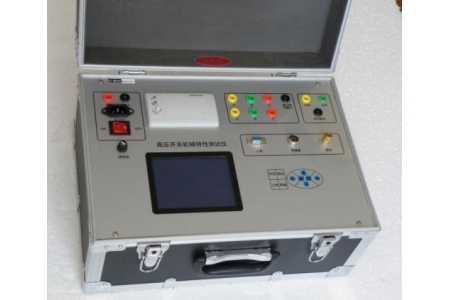
Partial Discharge Tester
A partial discharge tester (PD tester) is a specialized instrument used to detect insulation defects in high-voltage electrical equipment. It is hailed as the "invisible guardian" of the insulation status of power equipment. By capturing various physical signals generated by partial discharges, such as electromagnetic waves, ultrasonic waves, and transient earth voltages, it enables quantitative testing and localization of insulation conditions in transformers, GIS, switchgear, cables, instrument transformers, bushings, surge arresters, capacitors, and motors. It is a core tool for condition-based maintenance and predictive maintenance of power equipment.
What is Partial Discharge
Under the influence of a high-voltage electric field, non-penetrating micro-discharges occur at defects such as bubbles, cracks, and metallic impurities inside insulating materials, known as partial discharge. The energy of such discharges is extremely weak in the early stages, but like "termites eating wood," long-term action can cause molecular chain breakage and carbonization of insulating materials, potentially leading to insulation breakdown or even large-scale power outages. According to statistics, approximately 70% of operational faults in high-voltage switchgear can be traced back to insulation defects, and partial discharge is the earliest physical indicator of insulation deterioration.
Detection Principles (Multi-Technology Integration)
Modern PD detectors commonly adopt a multi-physical-field coupled detection strategy. Mainstream detection methods include:
Table
Download as Table
Export as Image
Method Detection Signal Frequency Band Features
Pulse Current Method (ERA) High-frequency pulse current Per IEC 60270 standard Reference method for quantitative detection, sensitivity up to 0.02 pC
Ultra-High Frequency Method (UHF) Electromagnetic waves 300 MHz – 3 GHz Strong anti-interference, can penetrate metal enclosures, preferred for GIS detection
Acoustic Emission Method (AE) Mechanical vibration sound waves 20 kHz – 300 kHz Unaffected by electromagnetic interference, precise localization
Transient Earth Voltage Method (TEV) Transient earth voltage 3 MHz – 100 MHz Non-invasive, suitable for rapid screening of switchgear
High-Frequency Current Transformer Method (HFCT) Ground wire pulse current 100 kHz – 100 MHz Suitable for online monitoring of cables and accessories
Acoustic Imaging Technology Ultrasonic array — Superimposes sound sources onto optical images for visual localization
Multi-sensor fusion detection is the current mainstream trend. By coordinating multiple technologies such as UHF+AE+TEV+HFCT and cross-validating data, the defect detection rate can be increased to over 95%.
Main Technical Parameters
Table
Download as Table
Export as Image
Item Parameter
Detection Sensitivity Pulse current method up to 0.02 pC; UHF/TEV/HFCT ≤0.5 pC under laboratory conditions
Sampling Rate Up to 2 GS/s, commonly 100 MS/s – 200 MS/s
Sampling Accuracy 8-bit, 12-bit, 14-bit, or 16-bit
Detection Range 1 pC – 20 nC (or equivalent mV values)
Linearity Error Typically ≤±10%
Localization Accuracy Acoustic imaging or UHF/AE fusion localization can reach <1 cm to ≤1 m
Synchronization Method Internal, external, wired/wireless synchronization, phase accuracy ≤0.1°
Testable Capacitance 6 pF – 250 μF
Amplifier Frequency Band Low-end selectable: 10 kHz/20 kHz/40 kHz; high-end selectable: 100 kHz/200 kHz/300 kHz
Operating Temperature -20°C to 50°C
Relative Humidity 0% – 90% RH
Data Storage Supports power-off protection, can import to host computer software for in-depth analysis
Core Functional Features
Multi-channel synchronous acquisition: Supports synchronous measurement of 3 or more channels, with inter-channel synchronization time up to ≤1 ns, ensuring time consistency of multiple signals
PRPD/PRPS pattern analysis: PRPD (Phase-Resolved Partial Discharge) 2D patterns show the relationship between discharge pulse amplitude and power frequency voltage phase; PRPS (Phase-Resolved Pulse Sequence) 3D patterns add a time dimension, fully reproducing the variation of discharge characteristics over time
Automatic discharge type identification: Combined with AI algorithms, it can automatically distinguish typical discharge types such as free metal particles, floating potential bodies, internal air gaps, and metallic protrusions
Digital filtering and noise separation: Effectively extracts real PD signals in strong electromagnetic interference environments
Acoustic imaging localization: Uses microphone arrays to convert ultrasonic signals into visual images, intuitively displaying discharge point locations like a "thermal imager"
Remote data access: Online monitoring systems support viewing real-time data and trends via the internet, with automatic alarm notifications when thresholds are exceeded
GPS positioning: Some portable devices support GPS positioning for recording detection location information
Product Forms
Table
Download as Table
Export as Image
Type Features Applicable Scenarios
Handheld Portable Weight 0.7 kg – 3.5 kg, battery life ≥8 hours, integrates multiple sensors Live-line inspection of substations, rapid screening
Benchtop Detection System Comprehensive functions, high precision, laboratory-grade Factory tests, acceptance tests, scientific research analysis
Online Monitoring System Fixed installation, 7×24 hour continuous acquisition, remote transmission Unattended substations, long-term monitoring of critical equipment
Mobile Online Monitoring Plug-and-play, temporary deployment, IP65 protection Troubleshooting equipment insulation issues, warranty verification
Typical Application Scenarios
Table
Download as Table
Export as Image
Equipment Type Recommended Detection Method Detection Purpose
GIS (Gas-Insulated Switchgear) UHF method primarily Detect internal insulation defects, free metal particles
Power Transformers AE+UHF+chemical methods Assess winding and oil-paper insulation condition
Switchgear TEV+AE Rapid screening of internal discharge defects
High-Voltage Cables HFCT+AE Detect insulation condition of cable body and accessories
Instrument Transformers/Bushings Pulse current method+AE Quantitatively detect insulation deterioration degree
Rotating Machines Pulse current method (IEC 60270) Stator winding insulation condition assessment
Surge Arresters/Capacitors Pulse current method Detect internal component defects
Result Evaluation Methods
Apparent discharge quantity (pC): Compare longitudinally with factory values or historical data; a continuously increasing trend should be taken seriously
Discharge frequency and repetition rate: An increase in the frequency of discharge pulses indicates worsening defects
PRPD pattern characteristics: Different discharge types exhibit different distribution patterns on the patterns, allowing determination of defect nature (corona discharge, floating discharge, internal air gap discharge, etc.)
Three-phase horizontal comparison: If data differences among the three phases of the same equipment are too large, the abnormal phase should be investigated
Multi-technology cross-validation: Single methods may lead to misjudgment; it is recommended to corroborate results using multiple detection methods
Applicable Standards
Table
Download as Table
Export as Image
Standard Number Name
IEC 60270 Partial Discharge Measurements (internationally recognized reference standard)
GB/T 7354 Partial Discharge Measurements
DL/T 846 Series Industry standards for partial discharge detectors
DL/T 417 Guide for On-site Partial Discharge Measurement of Power Equipment
DL/T 1630-2016 Technical Specification for UHF Partial Discharge Detection of Gas-Insulated Metal-Enclosed Switchgear
IEC 62478 Ultrasonic Detection of Partial Discharges in High-Voltage Equipment
Major Brands
Table
Download as Table
Export as Image
Category Brand Features
Imported OMICRON (Austria) MPD 800 universal + MONTESTO 200 mobile + MONGEMO online monitoring, laboratory-grade accuracy, fiber-optic isolation, powerful software analysis platform
Domestic TBEA PDP-SMART portable intelligent system, with fully automatic diagnosis and expert diagnosis dual modules, suitable for 66–500 kV cables
Domestic Beijing Kanggaote (KGT) Multi-sensor fusion technology, UHF+HF+AE+TEV+contact ultrasonic multimodal detection
Domestic Wuhan Moen Intelligent Portable multifunctional inspection instrument, integrates multiple sensors
Domestic Yangzhou Guohua Electric Advantage of localized service
Coordination with Previously Mentioned Instruments
Among the several power test instruments you have learned about, the partial discharge tester is positioned for early warning of insulation defects, complementing other instruments:
Loop Resistance Tester: Detects whether the conductive circuit contacts are good ("connected or not")
Transformer Turns Ratio Tester: Detects whether the winding turns ratio is correct ("accurate or not")
Dielectric Loss Tester: Evaluates the overall aging and moisture condition of insulating materials ("good or not")
Zinc Oxide Arrester Tester: Detects the condition of arrester valve blocks ("responsive or not")
Partial Discharge Tester: Captures discharge signals from tiny internal insulation defects ("hidden dangers or not")
Used together, these instruments can form a relatively complete preventive test system for power equipment.

