When purchasing a winding deformation tester, are you clear about which parameters to focus on under different site conditions? The following outlines several key selection points from the perspective of application scenarios.
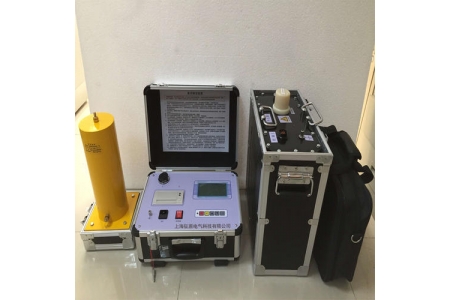
At substation maintenance sites, the instrument must adapt to outdoor environments. The HZ-WFA100 operates over a temperature range of -10℃ to 50℃, humidity 0 to 80%, and is powered by AC220V±10%, allowing direct use of on-site power. The sweep frequency range is 10Hz to 2MHz, expandable to 10MHz (optional), with linear or logarithmic sweep modes, and the interval and number of points can be set arbitrarily, making it easy to adjust the test plan according to transformer winding characteristics.
The manufacturing process requires fast, repeatable measurements. This instrument achieves a frequency accuracy of 0.001%, a sweep frequency accuracy of less than 0.01%, configurable matching resistance, curve display supporting amplitude-frequency curves (phase-frequency curves optional), and a measurement dynamic range of -120dB to 20dB. These parameters help establish winding fingerprints during factory tests for subsequent comparison.
For research institutions or condition assessment projects, the instrument supports custom sweep intervals and number of points, facilitating the acquisition of detailed frequency response data. The optional phase-frequency curve function provides additional analysis dimensions to help determine the degree of winding deformation.
Procurement personnel should verify indicators such as sweep frequency range, accuracy, curve display, and environmental adaptability based on the test object, site conditions, and data management requirements. The HZ-WFA100 offers the above performance and is suitable for routine power transformer winding deformation detection.

