

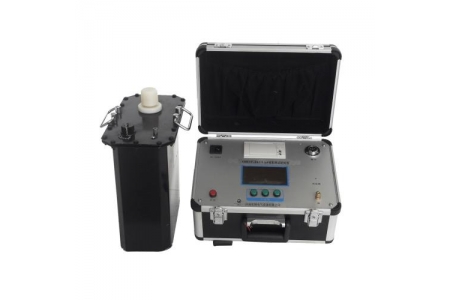
At substation sites, when operation and maintenance personnel diagnose transformer winding deformation, they often face the problems of high cost for bell-jar inspection and long power outage cycles. Although the traditional short-circuit impedance method can provide some reference, its sensitivity to subtle winding deformation is limited. Frequency response analysis (FRA) measures the response characteristics of windings at different frequencies, and can reflect changes in winding structure without bell-jar inspection or disassembly. The FY-8000 transformer winding deformation tester is based on the swept-frequency method and is suitable for field operation and maintenance personnel to quickly screen and compare transformer winding conditions.
The instrument uses the swept-frequency method to measure and diagnose transformer winding characteristics, with an output voltage of 220Vpp and an output impedance of 50Ω. The swept-frequency range covers low to high frequency bands, allowing acquisition of the amplitude-frequency response curve of the winding. During measurement, the instrument adopts software and hardware anti-interference technology, which helps improve the stability and repeatability of field measurements. Test data can be connected to a PC via USB, Ethernet, Wifi, Bluetooth, or RS232 interfaces for subsequent analysis.
Field wiring is simple and testing speed is fast, which can reduce power outage time and on-site workload. The instrument automatically saves environmental condition parameters, providing a reference basis for subsequent winding deformation diagnosis. The software has a database function, making data query and comparison convenient. The analysis software includes an expert diagnostic analysis system, which can assist operation and maintenance personnel in judging winding conditions. The data format is flexible and can import test data from mainstream domestic manufacturers, facilitating horizontal comparison of historical data.
The instrument is suitable for scenarios such as substation preventive tests, transformer manufacturer factory tests, and fault diagnosis. Operation and maintenance personnel can complete tests without bell-jar inspection, reducing on-site operational risks. The software management function takes field use needs into consideration and supports storage, retrieval, and comparison of test data. Through the database function, historical response archives of transformer windings can be established, providing data support for condition-based maintenance.

