
GB/T 1094.18-2016 "Power Transformers - Part 18: Frequency Response Measurements" sets clear measurement range and repeatability requirements for frequency response method detection of transformer winding deformation. The standard specifies that the sweep frequency range should preferably cover 500Hz to 2000kHz, and the resonant frequency point shift and amplitude variation of the frequency response curve are the main basis for judging winding condition. For procurement personnel, understanding the testing logic behind the standard is more important than simply comparing parameter tables.
Current winding deformation detection is mainly divided into three categories: Frequency Response Analysis (FRA), impedance method, and low-voltage impulse method. The FRA method measures the transfer function of the winding at different frequencies, reflecting changes in internal distributed inductance and capacitance parameters. It has relatively high sensitivity and can detect slight deformation and distributed parameter changes. Compared with the impedance method, the FRA method provides richer information, but result analysis requires some experience, and on-site interference can also affect curve quality. The impedance method is relatively simple to operate and intuitive for judging obvious deformation, but its ability to distinguish slight deformation is limited. The low-voltage impulse method responds quickly in specific scenarios, but repeatability and anti-interference capability are constrained by on-site conditions.
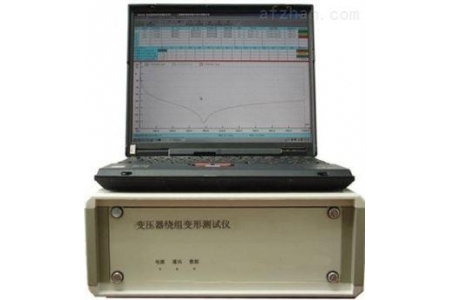
The FRA-9200 adopts the frequency response analysis method, with a sweep frequency range covering 500Hz to 2000kHz. Through the three-phase automatic testing function, the equipment reduces the number of manual wiring changes and improves on-site detection efficiency. During frequency response curve acquisition, the instrument records resonant frequency points and amplitude changes for operations and maintenance personnel to compare horizontally with historical data or transformers of the same model. It should be noted that the analysis and judgment of test results still need to be combined with equipment structure and operating conditions; the instrument itself does not directly provide conclusive judgments.
This equipment is suitable for winding condition detection of power transformers during transportation, installation, after short-circuit faults, and in regular maintenance. When selecting models, procurement personnel can comprehensively evaluate the applicability of FRA method equipment and impedance method equipment based on on-site interference levels, testing efficiency requirements, and data management needs. The FRA-9200 is aimed at scenarios requiring relatively high detection sensitivity and three-phase automatic testing capability, and parameter configuration and interface form can be confirmed according to actual project requirements.

