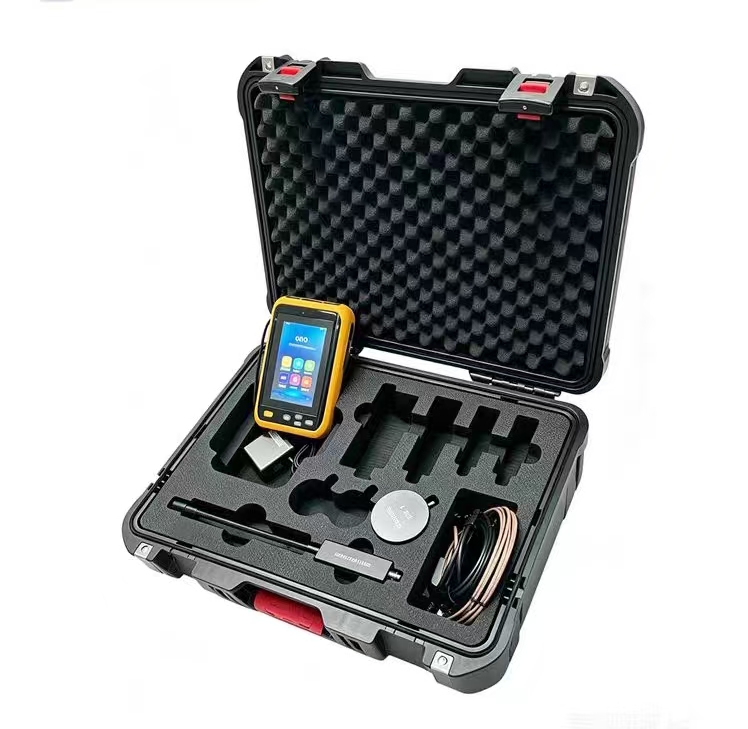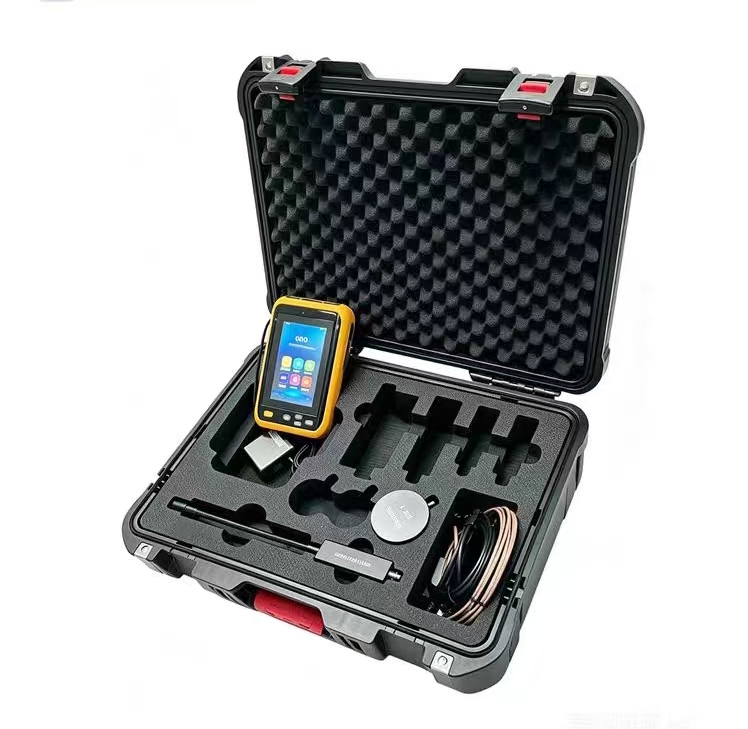
Winding Deformation Tester
The Winding Deformation Tester (full name: Transformer Winding Deformation Tester) is a core non-destructive testing device used in the power system to evaluate the mechanical structural health of the internal components of transformers. When a transformer experiences short-circuit current surges during operation, or suffers physical impacts during transportation or installation, its internal windings may undergo mechanical deformations such as twisting, bulging, or displacement. This instrument detects changes in electrical parameters caused by these deformations to determine whether the transformer requires major maintenance or should be taken out of service.
Working Principle and Core Technology
Winding deformation testers primarily employ two detection methods, and modern advanced equipment typically integrates both methods into a single unit:
Frequency Response Analysis (FRA): This is the most core detection method. Under the action of higher-frequency voltage, each winding of a transformer can be regarded as a passive linear two-port network composed of distributed parameters such as linear resistance, inductance (mutual inductance), and capacitance. The instrument scans sinusoidal wave signals over a specific frequency range (e.g., 1kHz-2MHz) to measure the amplitude-frequency response characteristics (transfer function) of the winding. If the winding deforms, its internal distributed inductance, capacitance, and other parameters will inevitably change, causing the frequency response characteristic curve to change.
Low-Voltage Short-Circuit Impedance Method: This method is specifically used to measure the impedance characteristics of power transformers. With the low-voltage side reliably short-circuited, a low-voltage power supply is applied to the high-voltage winding, and the instrument automatically tests and calculates the impedance of each phase and the impedance error percentage. It can accurately reflect the changes in impedance values before and after winding deformation, serving as an effective supplement to the frequency response method.
Key Standards and Selection Criteria
When selecting equipment and conducting tests, it is necessary to strictly adhere to relevant power industry standards and focus on the following core technical indicators:
Execution Standards: The instrument must comply with national power industry standards (such as DL/T 911-2016 "Frequency Response Analysis Method for Power Transformer Winding Deformation") as well as international electrical standards (such as IEC 60076-18).
Frequency Sweep Range and Accuracy: The frequency range should be as wide as possible (e.g., 10Hz-2MHz) to cover deformation characteristics across more frequency bands; frequency accuracy is extremely demanding, typically required to reach 0.001% or even higher.
Dynamic Range and Resolution: The dynamic range is recommended to be no less than 80dB, with 100dB or above being even better, in order to capture weak signal changes.
Measurement Speed and Automation: Modern instruments use high-speed DDS digital frequency sweep technology, with single-phase measurement time typically less than 60 seconds to 2 minutes, and support automatic three-phase testing.
Data Management and Analysis: Equipped with powerful analysis software, supporting longitudinal comparison of historical data (compared with original data) and lateral comparison (among three phases), capable of automatically diagnosing the degree of deformation (such as normal, mild, moderate, severe deformation) and generating test reports in Word or image formats.
Core Functions and Advantages
Non-Destructive Testing: No need to lift the transformer cover or disassemble it; all tests can be completed externally by simply removing the external connecting busbars, significantly reducing maintenance costs and time.
Precise Localization: Through multi-curve overlay comparison, it can accurately determine whether the winding has undergone deformations such as twisting, bulging, or displacement, as well as the severity of these deformations.
Dual Verification: The frequency response method has high sensitivity but relies on baseline data, while the impedance method can provide quantitative results but has lower sensitivity; combining the two can significantly improve the accuracy and reliability of diagnosis.
Strong Field Adaptability: Equipped with high-voltage isolation (e.g., 5000V isolation) to protect the testing computer, and has strong anti-interference capability, adapting to complex substation field environments.
Testing Precautions and Result Determination
Test Prerequisites: The necessary condition for transformer winding deformation is experiencing outlet short circuits, near-area short circuits, multiple overcurrent operations, or transportation impacts.
Wiring Specifications: During testing, it is essential to ensure the transformer is properly grounded. In the low-frequency part (tens of kHz), the frequency response curves should generally overlap well; otherwise, poor test wiring contact or broken wires should be suspected first.
Importance of Baseline Data: For transformers of 35kV and below, due to manufacturing process reasons, the consistency of frequency response characteristics may be poor. Therefore, it is essential to retain original data at the time of commissioning as a baseline for future longitudinal comparison.
Comprehensive Diagnosis: Conclusions should not be drawn solely based on changes in the frequency response curve from a single test. Comprehensive judgment should be made by combining historical data, three-phase lateral comparison, and low-voltage impedance test results. If the winding is severely deformed, it may also cause abnormal frequency response characteristics in adjacent windings, requiring thorough investigation.