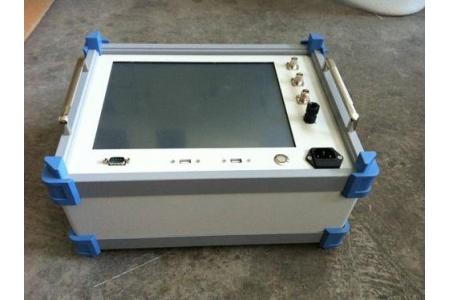
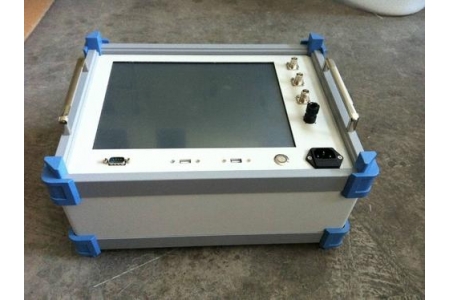
Winding Deformation Tester
The transformer winding deformation tester (also known as transformer winding deformation detector) is a non-destructive testing device specifically used to detect deformation issues in power transformer windings caused by mechanical or electrical stress. When a transformer is subjected to impact during transportation or suffers short-circuit current surges during operation, its internal windings may experience distortion, bulging, displacement, or inter-turn short circuits. This instrument can accurately capture these internal structural faults, serving as a "structural doctor" to determine whether a transformer requires major overhaul or can continue to be put into operation.
Core Detection Principles
Currently, mainstream winding deformation testers mainly adopt the Frequency Response Analysis (FRA) method, and some advanced devices also combine the low-voltage short-circuit impedance method:
Frequency Response Method (FRA): At higher frequencies, the transformer winding can be regarded as a passive linear two-port network composed of distributed parameters such as resistance, inductance, and capacitance. The instrument injects a sinusoidal sweep signal within a certain frequency range (typically 1kHz to 2MHz) into the winding, measures the voltage amplitude ratio between the excitation end and the response end, and generates an amplitude-frequency response curve. If the winding deforms, its internal distributed inductance and capacitance parameters will change, causing shifts in resonant frequencies or changes in amplitude on the frequency response curve.
Impedance Method: By short-circuiting the low-voltage side and applying a low voltage to the high-voltage side, the short-circuit impedance value of the transformer is measured. Changes in impedance before and after winding deformation can reflect the degree of damage. The impedance method provides accurate quantification but has relatively lower sensitivity, and it is often used in conjunction with the frequency response method to improve diagnostic accuracy.
Main Functions and Technical Features
Non-destructive and Efficient Testing: No need to lift the transformer cover or disassemble it; only removing external connection busbars is required, and the test can be completed in a very short time (typically only 1-2 minutes for a single winding measurement).
Intelligent Comparative Analysis:
Horizontal Comparison: Compare the frequency response curves among phases A, B, and C of the same transformer to assess the consistency of the three-phase structure.
Vertical Comparison: Compare current test data with factory original data or historical test data to accurately determine the degree of deformation (e.g., normal, slight, moderate, severe deformation).
Automated Diagnosis: Built-in expert intelligent analysis system can automatically calculate curve correlation coefficients and generate diagnostic reports in Word or JPG format with one click, greatly reducing reliance on operator experience.
High Anti-interference and Safety: Utilizes digital frequency synthesis technology with extremely high frequency accuracy (up to 0.001%); features 5000V high-voltage isolation design to fully protect the test computer and operator safety.
Key Technical Parameter Reference
Table
Download as Table
Export as Image
Parameter Item Typical Value/Range
Sweep Frequency Range 1kHz to 2MHz (some up to 10Hz to 2MHz)
Frequency Accuracy ≤ 0.01% (high-precision models up to 0.001%)
Signal Output/Input Impedance Output 50Ω / Input 1MΩ
Measurement Dynamic Range -120dB to +20dB
Applicable Voltage Levels 6kV to 500kV power transformers
Core Application Scenarios
Post-Short-Circuit Fault Diagnosis: After a short circuit occurs at the transformer outlet or in the near zone, the tester must be used immediately to detect whether the winding is damaged, preventing the equipment from "operating with defects" and causing larger accidents.
Periodic Preventive Tests: As a routine inspection item during annual maintenance, establish and record the frequency response characteristic baseline of the winding, and evaluate equipment health status through long-term trend monitoring.
Transportation and Installation Acceptance: Conduct tests after long-distance transportation to identify internal displacement caused by impacts, clarify responsibility attribution, and avoid equipment entering the grid with defects.
DL/T 911-2016 "Frequency Response Analysis Method for Power Transformer Winding Deformation" (domestic core industry standard)
DL/T 1093-2018 "Guide for Detection and Judgment of Power Transformer Winding Deformation by Reactance Method"
IEC 60076-18 "Power Transformers - Part 18: Frequency Response Analysis Method for Transformer Winding Deformation" (international electrical standard)
Mainstream Brand Reference
Table
Download as Table
Export as Image
Brand Type Representative Brands/Manufacturers Feature Summary
Domestic Main Manufacturers Wuhan Kaidi Zhengda, Wuhan Moen Intelligent, Zhongshi Holding, Wuhan UHV, Weian Electric, etc. Rich product lines, high cost-performance, software and hardware strictly aligned with the latest domestic standards, with significant advantages in localized services, field portability, and customized diagnostics.
When selecting, it is recommended to focus on the instrument's sweep frequency range, frequency accuracy, dynamic range, and the intelligence level of the analysis software, and ensure the equipment has a third-party verification certificate from a provincial-level or above metrology institute or electric power research institute.