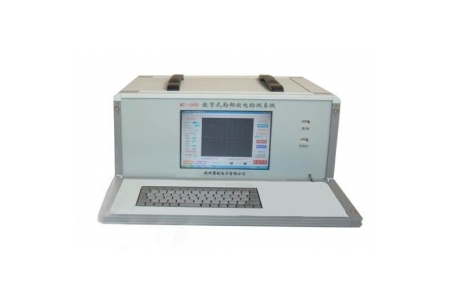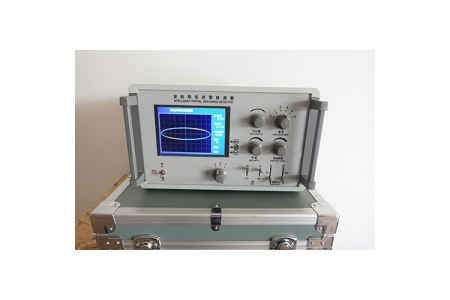
Zinc Oxide Arrester Tester
Zinc Oxide Arrester Tester (also known as Zinc Oxide Arrester Resistive Current Tester, Intelligent Arrester Characteristic Tester) is a specialized instrument used to detect the electrical performance of zinc oxide arresters (MOA). It is suitable for live or outage detection of arresters at various voltage levels and is a core diagnostic tool for timely discovery of dangerous defects such as internal insulation moisture and valve plate aging.
Working Principle
Under normal operation, a zinc oxide arrester mainly conducts capacitive current at power frequency voltage, with a very small resistive current component. When the valve plates age or internal moisture occurs, the resistive current component increases significantly. Therefore, monitoring only the total current often makes it difficult to detect early defects; the resistive current must be separated from the total current for precise analysis.
The instrument obtains the reference voltage signal from the secondary side of a voltage transformer (PT) or an induction plate, while collecting the arrester leakage current signal through a current clamp or counter terminal. Using Fourier harmonic analysis and digital waveform analysis, the total current is decomposed into fundamental and harmonic components, and the fundamental peak value of the resistive current is calculated using the projection method, thereby accurately determining the health status of the arrester.
Core Measurement Parameters
Table
Download as Table
Export as Image
Parameter Meaning Diagnostic Significance
Total Current Total leakage current flowing through the arrester under operating voltage Assessment of overall leakage level
Resistive Current (Fundamental Peak) Component of total current in phase with voltage Most critical diagnostic indicator; increase indicates valve plate aging or moisture
Capacitive Current Component of total current orthogonal to voltage Dominant under normal conditions; reflects arrester capacitance characteristics
Harmonic Content (3rd to 9th) RMS values of each harmonic of resistive current Auxiliary judgment of aging degree and degradation mode
Active Power Active power consumed by the arrester Increase indicates higher losses and insulation deterioration
Phase Difference Phase angle between voltage and current Greater deviation from 90° indicates larger resistive component
Main Technical Parameters
Table
Download as Table
Export as Image
Item Parameter
Voltage Acquisition Range 0~250V (PT secondary side)
Current Acquisition Range 0~20mA
Angle Measurement Range 0°~360°
Total Current Measurement Accuracy ±(Reading×5%+5μA)
Resistive Current Measurement Accuracy ±(Reading×5%+5μA)
Voltage Measurement Accuracy ±(Reading×2%+0.2V)
Power Supply Built-in lithium battery or AC 220V±10% 50Hz
Continuous Working Time 6~8 hours (lithium battery powered)
Operating Temperature -10℃~50℃
Relative Humidity ≤90%RH (non-condensing)
Data Storage More than 200 groups, supports power-off protection
Communication Interface USB, RS232, Bluetooth, some support 485 wired synchronization
Sync Sampling Methods
Table
Download as Table
Export as Image
Method Principle Features
Wired Synchronization Directly connect to PT secondary side to obtain voltage reference signal Highest accuracy, transmission distance about 40 meters
Wireless Synchronization Host and voltage collector communicate via wireless module Transmission distance up to 1500 meters or more, safe and convenient operation
Induction Plate Sampling Use induction plate near arrester to obtain electric field strength as voltage reference No need to contact high-voltage circuit, suitable for electric field environments of 30kV/m~300kV/m
No-Voltage Method Use software to set angle or current analysis method to find voltage reference No voltage signal required, suitable for situations where voltage cannot be obtained
Core Functional Features
Live Detection: No need for outage, test directly under operating status, without affecting power supply reliability
Three-Phase Simultaneous Measurement: Supports simultaneous measurement of three-phase current and voltage, greatly improving on-site work efficiency
Interphase Interference Compensation: Built-in automatic edge-phase correction function, effectively overcoming interference from three-phase mutual influence at 220kV and above voltage levels
Harmonic Analysis: Accurately analyzes fundamental and 3rd to 9th harmonic content, comprehensively assessing arrester degradation status
Waveform Display: Large screen real-time display of voltage and current true waveforms, intuitive judgment of signal quality
Multiple Safety Designs: Instrument internally only carries low voltage (not exceeding 8.4V), current and voltage sensors are fully isolated, ensuring operator safety
Data Management: Built-in thermal printer, supports U-disk export of Word files, some models support Bluetooth APP control and real-time data transmission to mobile phones/tablets
Typical Application Scenarios
Table
Download as Table
Export as Image
Scenario Description
Substation Live Inspection Regular online detection of arresters in operation to timely discover early defects
Line Arrester Survey Batch detection of arresters on transmission and distribution lines
Acceptance Test Performance verification of newly installed arresters before commissioning
Outage Maintenance Test Precise measurement under outage conditions in conjunction with preventive tests
Laboratory Factory Inspection Factory performance testing by arrester manufacturers
Monitor Verification Verification of current meter, pollution meter, and operation counter of arrester monitors
Result Judgment Methods
Resistive Current: Compare longitudinally with factory values or historical data; if resistive current increases significantly (usually more than 50% of initial value), high attention should be paid
Total Current: Monitoring only total current may mask early defects; comprehensive judgment should combine with resistive current
Harmonic Changes: Abnormal increase in 3rd and 5th harmonic content usually indicates deepening valve plate aging
Three-Phase Horizontal Comparison: If data differences among three phases of the same arrester group are too large, abnormal phase should be investigated
Executive Standards
Table
Download as Table
Export as Image
Standard Number Name
DL/T 474.5-2018 Guide for Field Insulation Tests Part 5: Arrester Tests
DL/T 987-2005 General Technical Conditions for Zinc Oxide Arrester Resistive Current Testers
DL/T 596-1996 Regulations for Preventive Tests of Electric Power Equipment
Operation Precautions
PT Secondary Wiring: When taking reference voltage from PT secondary, carefully check wiring; strictly prohibit short circuit of PT secondary
Do Not Reverse Signal Lines: Voltage signal input line and current signal input line must not be reversed, otherwise the instrument may be burned
No Hot Plugging: Do not plug or unplug measurement lines when input voltage and current are present
Battery Maintenance: If the instrument is not used for a long time (more than three months), charge it every 3 months (more than 6 hours) to prevent battery depletion damage
Environmental Requirements: Do not place in humid or excessively high temperature environments; avoid live testing during thunderstorm weather
Major Brands
Table
Download as Table
Export as Image
Category Brand Features
Domestic Wuhan Moen Intelligent (Fankester) MEYB-BS type, wireless transmission over 1500 meters, supports Bluetooth APP control
Domestic Wuhan UHV UHV-543 type, digital waveform analysis, supports wired/wireless/no-voltage three synchronization methods
Domestic Wuhan Huading Electric HDYZ handheld type, 7-inch touch screen, supports U-disk export
Domestic Binghua Wang Electric BHW handheld type, host weighs only 1.0kg, integrated electric field strength measurement
Domestic Yangzhou Guohua Electric Advantage of localized service
If you need to understand specific model comparisons, the combined test process with the dielectric loss tester or transformer ratio tester mentioned earlier, or test schemes for a specific voltage level, you can tell me and I will help you find more information.