

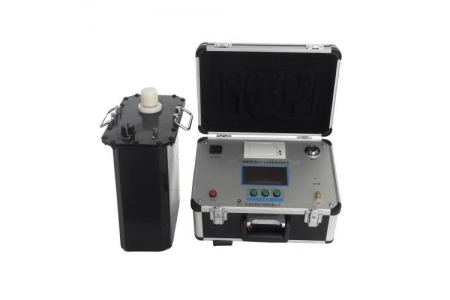
Substation switchgear, GIS composite apparatus, and high-voltage cable terminations are common scenarios for partial discharge detection. O&M personnel hold the detector close to the equipment enclosure and capture discharge signals through ultrasonic or transient earth voltage (TEV) sensors to determine whether there are defects inside the insulation. The following questions come from actual feedback from on-site O&M personnel for everyone's reference.
A: Partial discharge signals are weak, and on-site electromagnetic interference is complex. It is recommended to prioritize the combined ultrasonic and TEV detection mode, and confirm an abnormality only when both sensors alarm simultaneously. For areas with high background noise, first record the background value and then compare it with the measured value. The PD-8600 provides an automatic background noise suppression function, and operators can also manually set the threshold. It should be noted that nearby welding operations, mobile phone communications, and fluorescent lamp ballasts may all generate interference, so these periods should be avoided as much as possible during detection or shielding measures should be taken.
A: Ultrasonic sensors are suitable for detecting surface discharge and corona inside switchgear, and couplant must be applied during measurement to ensure acoustic wave transmission. TEV sensors are sensitive to internal insulation defects, and they should be placed tightly against the metal enclosure during installation to avoid looseness. For GIS equipment, it is recommended to use ultra-high frequency (UHF) sensors to couple signals through the basin insulator casting opening or flange gaps. The PD-8600 supports connection to the above three types of sensors, and the device automatically identifies the type and switches the range.
A: Avoid severe vibration and humid environments for the main unit, and charge it once every three months when not in use for a long time. Avoid excessive bending of sensor cables, especially UHF coaxial cables. Check the battery level before detection, as low battery may cause waveform distortion. Clean the sensor surface after each use and keep it dry. If abnormal fluctuations in measurement data are found, first check whether the sensor connection is reliable, and then rule out equipment failure.
The PD-8600 partial discharge detector is suitable for inspection of power equipment at voltage levels of 10kV~220kV. Its measurement frequency band covers 20kHz~1.5GHz, and it has waveform storage and USB data export functions. On-site O&M personnel can combine historical data for longitudinal comparison to assist in judging the trend of insulation condition changes.

