

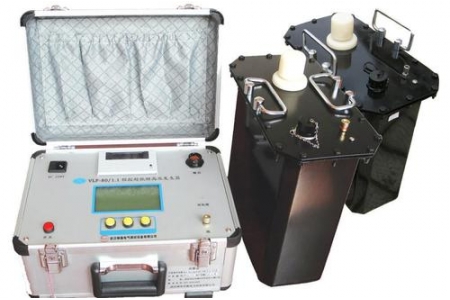
Transformer winding deformation tester is an important equipment for evaluating the mechanical structural integrity of power transformer internal components. To more comprehensively and accurately reflect the winding characteristics of transformers, the current mainstream test devices typically integrate two testing methods: Frequency Response Analysis (FRA) and Short-Circuit Impedance Method (Impedance Method).
These two methods differ in testing principles, focus areas, and execution standards, as detailed below:
1. Frequency Response Analysis (FRA)
FRA is one of the most commonly used and sensitive methods for detecting transformer winding deformation.
Testing Principle: Under higher frequency voltage, each winding of the transformer can be considered a passive linear two-port network. The instrument injects a swept sine wave excitation signal into the winding to detect the amplitude-frequency response characteristics of each winding. If local distortion, bulging, or displacement occurs in the winding, its internal distributed inductance and capacitance parameters will change, causing the network's transfer function (amplitude-frequency response curve) to change.
Core Features:
Non-destructive and efficient: No need to lift the transformer cover or disassemble it; measurement time for a single winding is typically within 1-2 minutes.
High sensitivity: Utilizes Digital Frequency Synthesis (DDS) technology with a wide sweep frequency range (e.g., 1kHz-2MHz) and extremely high frequency accuracy (up to 0.001%), enabling precise capture of subtle deformation characteristics.
Intelligent diagnosis: Supports simultaneous loading of multiple historical curves for horizontal and vertical comparison, automatically calculates relevant parameters, and provides diagnostic conclusions.
Execution Standards: Primarily follows the power industry standard DL/T 911-2016 "Frequency Response Analysis Method for Power Transformer Winding Deformation" and the international electrotechnical standard IEC 60076-18.
2. Short-Circuit Impedance Method (Impedance Method)
The impedance method focuses on changes in macroscopic parameters and serves as an important supplement to FRA.
Testing Principle: The reactance component of transformer short-circuit impedance mainly reflects the leakage flux path of the winding, closely related to the geometric dimensions and inter-turn distances of the winding. When radial or axial deformation occurs in the winding, the leakage flux path changes, and the leakage reactance value changes accordingly. This method involves reliably short-circuiting the low-voltage side, applying voltage to the high-voltage side, and precisely measuring changes in impedance values to determine deformation.
Core Features:
Easy operation: Modern instruments often use the low-voltage short-circuit impedance method, requiring no external high-capacity power supply; AC220V is sufficient for automatic three-phase testing, with automatic calculation of impedance error percentage.
High intuitiveness: During testing, voltage and current waveforms are displayed in real-time, and test results directly reflect changes in impedance values.
Condition assessment: Typically, the measured short-circuit impedance value is compared with the factory nameplate value or historical data. Generally, a deviation within ±2% is considered good, while exceeding ±3% indicates severe defects.
Execution Standards: Primarily follows DL/T 1093-2018 "Guide for Detection and Judgment of Power Transformer Winding Deformation by Reactance Method".
3. Comprehensive Advantages of Combining Both Methods
Integrating FRA and impedance methods into the same test device enables complementary advantages:
Comprehensive diagnosis: FRA is extremely sensitive to local minor deformations, while the impedance method intuitively reflects changes in overall electrical parameters. Combining both allows for more accurate analysis and diagnosis of winding deformation.
Compliance with regulatory requirements: National anti-accident regulations clearly stipulate that transformers with voltage levels of 110kV and above should undergo low-voltage short-circuit impedance testing or FRA testing for winding deformation before factory delivery, before commissioning, or after experiencing nearby sudden short circuits, to retain original records as a basis for subsequent comparisons.
If you are evaluating or procuring such a combined test device, it is recommended to focus on whether the equipment simultaneously meets the latest standard requirements of DL/T 911-2016 and DL/T 1093-2018, as well as whether the accompanying analysis software has comprehensive curve comparison and automatic diagnostic functions.

