Transformer Turns Ratio Tester
The Transformer Turns Ratio Tester (also known as Turns Ratio and Group Tester, Automatic Turns Ratio Tester) is a specialized electrical testing instrument with a microcontroller at its core, used for precisely measuring the voltage ratio (turns ratio) and winding connection group of power transformers. It is a core testing device in transformer production inspection, installation acceptance, preventive testing, and fault diagnosis.
The instrument applies a low-voltage test signal to the high-voltage side of the transformer (internally synthesized three-phase standard sine wave with distortion less than 0.1%), while collecting the voltage amplitude and phase difference on both high and low voltage sides. Through digital signal processing, it automatically calculates the turns ratio, ratio error, and winding connection group.
Specifically:
Ratio Measurement: Compares the voltage ratio of corresponding windings between high and low voltage ends, and compares with the nameplate rated ratio to derive the error percentage.
Group Determination: By measuring the phase angle difference (0°~360°) between high and low voltage windings, it converts to clock notation (0~11 o'clock) to determine the connection group (e.g., Yyn0, Dyn11, etc.).
Modern instruments generally adopt true three-phase testing technology - single-phase power input, internal generation of three-phase test power output. Test results are not affected by power frequency fluctuations or amplitude variations, providing better equivalence and avoiding group misjudgment.
Table
Download as Table
Export as Image
Type Features Applicable Scenarios
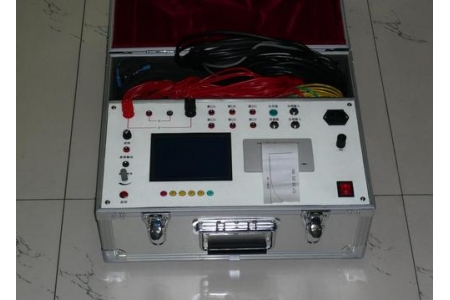
Benchtop Automatic Type Large screen color display, comprehensive functions, high accuracy (Class 0.2), built-in printer and storage Substations, laboratories, factory inspection
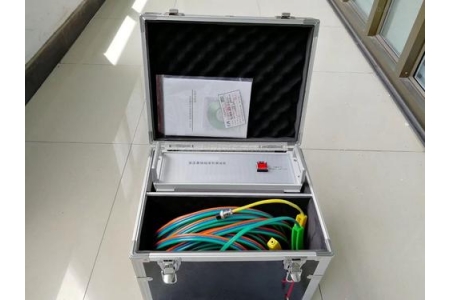
Portable/Handheld Type AC/DC dual-use (built-in lithium battery), weight 1.3~2kg, can test more than 100 units per charge On-site inspection, multi-point mobile operations
Multifunctional Type Adds CT/PT testing, phase angle measurement, and six-phase vector diagram display based on ratio testing Railway electrical systems, Z-type/Scott transformers
Wide measurement range: Ratio range covers 1~10000, accuracy is Class 0.2 for 1~1000, and Class 0.5 for 1000~10000 (national standard GB1094 specifies allowable deviation of 0.5% for power transformer ratios)
Fully automatic operation: One-time wiring automatically completes three-phase ratio, group, and polarity testing, with test speed of 8~35 seconds for a set of three-phase data
Blind test function: No need to know the transformer connection group or connection method in advance; it automatically identifies upon startup, especially suitable for testing old equipment without nameplates
Automatic group identification: Supports various connection groups such as Y/y, Y/d, D/y, D/d, Zn/y, Zn/d, and automatically determines the group number (0~11)
Tap changer testing: Only need to input the rated ratio once, then automatically calculate the ratio error at each tap position
Comprehensive safety protection: Includes high-low voltage reverse connection protection, output short-circuit protection, overcurrent and overvoltage protection, and protection against accidental connection to 380V power supply
Data management: Built-in storage can save 50~1000 sets of data, supports USB export, RS232/RS485 communication, Bluetooth transmission, and on-site thermal printing
Factory inspection: Verification of ratio and group for semi-finished and finished products during transformer production
Commissioning test: Before new transformers are put into operation, verify that the ratio and group match system requirements
Preventive testing: Periodically check whether windings of transformers in service have deformations, inter-turn short circuits, or other defects
Tap changer testing: Verify that the ratio at each tap position of on-load/off-load tap-changing transformers is correct and contacts are good
Parallel operation verification: Ensure that the groups of parallel transformers are consistent to avoid short-circuit accidents
Instrument transformer testing: Ratio and polarity testing of PT (voltage transformers) and CT (current transformers)
Special transformers: Z-type winding transformers, rectifier transformers, railway Scott/inverse Scott transformers, etc.
Key parameters:
Ratio range and accuracy: Regular Class 0.2 is sufficient for most scenarios; choose Class 0.1 for high-precision requirements
Test modes: Confirm whether blind testing, three-phase simultaneous testing, and single-phase testing are supported
Power supply: Choose AC220V powered type for fixed locations; prefer AC/DC dual-use (built-in lithium battery) for field operations
Additional functions: Whether CT/PT testing, phase angle measurement, and six-phase vector diagram display are needed
Data storage and export: Pay attention to storage capacity and communication interfaces (USB/RS232/Bluetooth)
Protection level: Confirm whether reverse connection protection, short-circuit protection, and overvoltage protection are included
Selection recommendations:
Substations/power plants regular maintenance → Benchtop automatic type (comprehensive functions, high accuracy)
Multi-point inspection/outdoor operations → Portable/handheld type (lightweight, built-in battery)
Railway/special transformers → Multifunctional type (supports Z-type, Scott connections, with phase angle measurement)
Transformer manufacturers → High-precision type (Class 0.1 accuracy, with current testing function to determine inter-turn short circuits)