

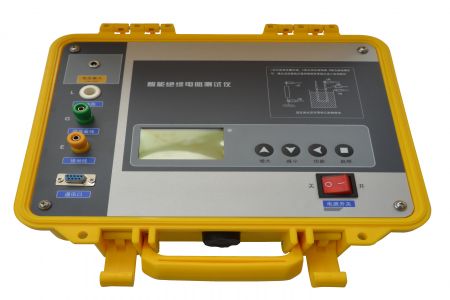
High voltage switch mechanical characteristics tester circuit breaker dynamic characteristics tester disconnector tester
The "high voltage switch mechanical characteristics tester", "circuit breaker dynamic characteristics tester" and "disconnector tester" you mentioned cover the testing needs of two different but equally critical types of high voltage switchgear equipment in the power system. Although circuit breakers (responsible for interrupting fault currents) and disconnectors (responsible for providing a visible disconnection point) have different functions, their testing instruments also have different focuses.
The following is a summary of the core functions, test items, and selection points for these two categories of testing instruments:
1. High Voltage Switch Mechanical Characteristics Tester (Circuit Breaker Dynamic Characteristics Tester)
This type of instrument is mainly used to detect the mechanical action characteristics of high voltage circuit breakers (such as vacuum, SF6, oil circuit breakers, etc.) during the opening and closing process. It is a core tool for evaluating whether the circuit breaker can reliably extinguish the arc and interrupt fault currents.
1. Core Test Items:
Time parameters: inherent opening/closing time, three-phase synchronization, inter-phase non-synchronization, reclosing process time (metal short-circuit time, dead time, etc.).
Speed and travel: opening/closing speed at contact separation/make, maximum speed, average speed, as well as total travel, contact gap, overtravel, and overtravel stroke.
Contact bounce characteristics: closing bounce time, bounce count, and bounce waveform. Excessive bounce can easily cause contact burning.
Coil current and operating voltage: real-time recording of the current waveform of the opening/closing coil to evaluate the state of the electromagnet and operating mechanism; built-in adjustable DC power supply for low voltage operation test to verify the operating limits of the circuit breaker.
2. Key Technical Indicators:
Time accuracy: usually requires a resolution of 0.1ms or even 0.01ms, with an error controlled within 0.5%.
Anti-interference capability: The electromagnetic environment at substation sites is complex, so the equipment needs to have strong anti-induced voltage interference capability (such as withstanding interference from 500kV substation environments).
Channel configuration: The conventional configuration is 12 independent contact channels, meeting the testing needs of most three-phase circuit breakers.
2. Disconnector Tester (Contact Finger Pressure Tester)
Disconnectors do not have arc extinguishing devices, and their core function is to provide a visible disconnection point. Therefore, the dedicated tester for disconnectors mainly focuses on measuring the physical parameters of contact state to prevent heating and burning accidents caused by poor contact.
1. Core Test Items:
Contact finger contact pressure/clamping force: Use a simulated contact sensor to measure the contact pressure between the moving and fixed contacts. Insufficient pressure can lead to uneven current distribution, contact overheating, or even welding.
Contact finger opening distance: Measure the opening distance of the disconnector contacts to ensure compliance with insulation and safety requirements.
Loop resistance (requires a loop resistance tester): Although the loop resistance tester is a separate device, it is often used in conjunction with disconnector maintenance. By injecting a DC current of not less than 100A, the resistance value of the conductive loop is measured to determine contact oxidation or spring fatigue.
2. Key Technical Indicators:
Force measurement range and accuracy: The range can typically reach 1000N, with an error of ≤1%.
Sensor adaptability: Different shapes of sensors or fixtures need to be equipped to adapt to different structures of disconnectors, such as folding arm type, scissor type, and tulip contact type.
Portability and battery life: Since disconnectors are mostly outdoors, the instrument usually has a built-in lithium battery to support long-term field operations.
3. Summary and Selection Suggestions
If you are concerned about the operational reliability of circuit breakers: choose a high voltage switch mechanical characteristics tester, focusing on its time accuracy, sensor compatibility, and the output capability of the built-in power supply.
If you are concerned about the health of the conductive loop of disconnectors: choose a disconnector contact finger pressure tester, focusing on the sensor's range, accuracy, and adaptability to different contact shapes.

