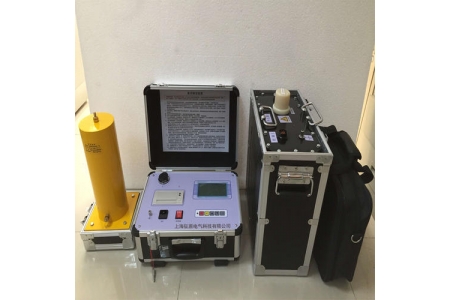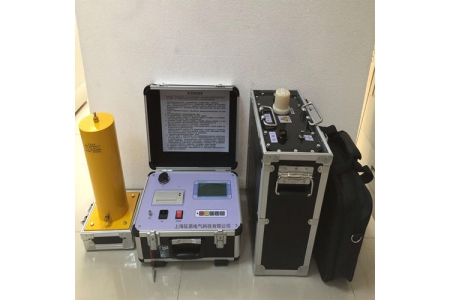
Winding Deformation Tester
The transformer winding deformation tester (also known as transformer winding deformation detector, winding deformation analyzer) is a specialized non-destructive testing device used to detect mechanical deformation of power transformer windings. It obtains the "electrical fingerprint" of the winding through Frequency Response Analysis (FRA), and can determine whether the winding has hidden defects such as distortion, bulging, displacement, and inter-turn short circuits without lifting the tank or disassembling the transformer body. It is a key instrument for preventive testing and fault diagnosis of transformers.
Core Principle: Frequency Response Analysis (FRA)
Under the action of a relatively high-frequency voltage, each winding of a transformer can be equivalent to a passive linear two-port network composed of distributed resistance, inductance (mutual inductance), and capacitance, and its internal characteristics can be described by the transfer function H(jω).
After the transformer is manufactured, the geometric structure and material properties of the winding are determined, and its amplitude-frequency response characteristics (i.e., the zero and pole distribution of the transfer function) have high stability and uniqueness, like the "frequency response fingerprint" of the winding.
When the winding undergoes mechanical deformation due to short-circuit current impact, transportation vibration, long-term aging, and other factors, the spacing between coils, inter-turn capacitance, leakage inductance, and other distributed parameters change accordingly, causing the zeros and poles of the transfer function to shift, and the resonant peak frequency and amplitude of the amplitude-frequency response curve to change significantly.
Testing Process
The internal DDS signal source of the instrument generates a standard sine wave sweep signal (excitation signal), which is applied to one end of the winding
Dual-channel synchronous acquisition of excitation signal and response signal
Calculate the transfer function and generate the amplitude-frequency response curve
Compare the current curve with the historical original curve (longitudinal comparison) or the reference curve of the same model/specification transformer (lateral comparison)
Determine whether the winding is deformed and the severity based on the degree of curve difference
Diagnostic Significance of Frequency Bands
Frequency Band Frequency Range Winding Characteristics Reflected Abnormality Indication
Low Frequency Band 1kHz~100kHz Overall Inductance Characteristics Overall deformation, core displacement, inter-turn/disc short circuit
Medium Frequency Band 100kHz~600kHz Local Structural Characteristics Bulging, collapse, distortion and other local deformations
High Frequency Band 600kHz~1MHz and above Inter-turn Distributed Parameter Characteristics Hidden inter-turn/disc faults, overall winding displacement, lead displacement
Sweep Measurement Range 1kHz~2MHz (linear sweep); some models can be extended to 10Hz~10MHz
Segmented Sweep Range 0.5kHz~1MHz, divided into multiple sub-intervals for refined sampling
Sweep Frequency Accuracy ≤0.01% (some models up to 0.001%)
Amplitude Measurement Range -100dB~+20dB (some models -120dB~+20dB)
Amplitude Measurement Accuracy 0.1dB (some models ±0.5dB)
Signal Output Impedance 50Ω
Signal Input Impedance 1MΩ
Acquisition Channel Quantization Accuracy 12-bit~16-bit
Maximum Sampling Rate 20Msps~100Msps
Test Repeatability ≥99.5% (some models up to 99.9%)
Single-phase Test Time Usually less than 60 seconds~2 minutes
Communication Interface USB, Ethernet, WiFi, Bluetooth
Display Method 7-inch touch screen (integrated model) / laptop (split model)
Operating Temperature -10℃~50℃
Relative Humidity ≤90%RH
Main Unit Weight Approximately 5kg (integrated model)
Non-destructive Testing: No need to lift the tank or disassemble the transformer; testing can be completed in the power-off state
Dual Sweep Mode: Supports linear sweep (constant step full-band traversal, suitable for routine preventive testing) and segmented sweep (refined sampling in sensitive frequency bands, suitable for deep mining of early weak defects)
Intelligent Diagnosis: Built-in expert analysis system based on the correlation coefficient method, automatically compares curve similarity, and generates diagnostic conclusions such as "normal," "slight deformation," "moderate deformation," and "severe deformation"
Lateral/Longitudinal Comparison: Supports lateral comparison among three phases and longitudinal comparison of historical data of the same phase, automatically calculating correlation coefficients
Data Management: Automatically generates Word format test reports, supports U disk/Ethernet/Bluetooth data export
Built-in Printing (Integrated Model): Comes with a micro thermal printer, can print frequency response curves and test data on site
Comprehensive Protection: 5000V voltage isolation to ensure tester safety
Oil-immersed power transformers of 6kV and above voltage levels (110kV~1000kV)
Dry-type transformers, rectifier transformers, converter transformers
Autotransformers, distribution transformers, electric furnace transformers
Traction transformers and other special-purpose transformers
Mandatory Testing Situations
Before new transformer commissioning: Collect initial frequency response data as the baseline "fingerprint"
After suffering near-zone short-circuit impact: Compare with pre-short-circuit data to determine whether damage has occurred
After transportation collision: Check whether winding displacement was caused during transportation
After winding replacement: Verify repair quality
Normal Operation and Maintenance Cycle: Perform routine testing every 1~3 years
DL/T 911-2016 Frequency Response Analysis Method for Power Transformer Winding Deformation Core Testing Standard
GB/T 1094.18 Power Transformers Part 18 Technical Requirements Related to Transformer Winding Deformation
DL/T 1093-2008 Guidelines for Detection and Judgment of Power Transformer Winding Deformation by Reactance Method Auxiliary Standard for Short-circuit Impedance Method
DL/T 1952-2018 Calibration Specification for Transformer Winding Deformation Testers Basis for Instrument Calibration
JJF(Ji)219-2024 Verification and Testing Method for Winding Deformation Testers Local Calibration Specification
JJF(Xin)108-2023 Verification and Testing Method for Winding Deformation Testers Local Calibration Specification
Deformation Degree Correlation Coefficient Range
Normal Winding >0.99 (longitudinal comparison) / >0.98 (lateral comparison)
Slight Deformation 0.97~0.99
Moderate Deformation 0.95~0.97
Severe Deformation <0.95
Frequency-band Correlation Coefficient Criteria
Deformation Degree RLF (Low Frequency Band) RMF (Medium Frequency Band) RHF (High Frequency Band)
Normal ≥2.0 ≥1.0 ≥0.6
Slight Deformation 2.0~1.0 1.0~0.6 —
Obvious Deformation 1.0~0.6 <0.6 —
Severe Deformation <0.6 — —
Remove External Leads: Before testing, all external connecting leads on the bushing side of the transformer under test must be removed to eliminate interference from external circuits on the frequency response characteristics
Reliable Grounding: All test circuits and the transformer core grounding terminal should be connected to a common grounding point using short and direct dedicated grounding wires to ensure minimized grounding impedance
Fixed Tap Position: Each test must fix the on-load tap changer at the same position (usually recommended to be placed at the highest tap position), because changing the tap position directly changes the effective number of turns and distributed parameters of the winding, undermining the validity of longitudinal comparison
Sufficient Demagnetization: The transformer must be fully demagnetized before testing
Environmental Requirements: Ambient temperature -15℃~+50℃, relative humidity ≤90%, testing should not be carried out in thunderstorm weather
Establish Baseline Data: Before commissioning a new transformer, the initial frequency response curve must be collected as the baseline for subsequent longitudinal comparison
Auxiliary Testing: It is recommended to combine DC resistance testing, oil chromatography analysis (warning when acetylene content >5μL/L), vibration testing, etc. for comprehensive judgment
Comparison Item Frequency Response Analysis (FRA) Short-circuit Impedance Method (Reactance Method) Low Voltage Impulse Method
Detection Principle Sweep frequency measurement of amplitude-frequency response Measure impedance/leakage reactance change rate at 50Hz Inject pulse signal and analyze reflected waveform
Sensitivity High, can detect local deformation Relatively low, reflects overall change Relatively high
Judgment Threshold Correlation coefficient method Impedance change rate >3% is abnormal Waveform comparison method
Degree of Standardization High (DL/T 911-2016) Relatively high (DL/T 1093-2008) Relatively low
Field Applicability Good, mainstream method Good, simple operation General
Localization Capability Can roughly locate through frequency band analysis Cannot locate Can roughly locate
Summary: Frequency Response Analysis (FRA) is currently the mainstream method for transformer winding deformation detection, with high sensitivity and a good degree of standardization, and is recommended as the first choice; the short-circuit impedance method can be used as an auxiliary means, and the combination of the two is more effective.