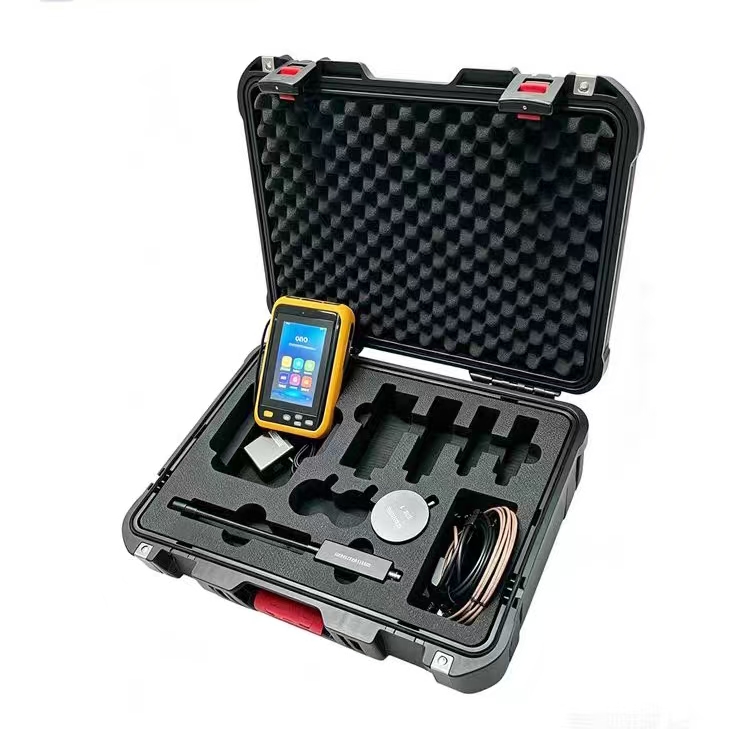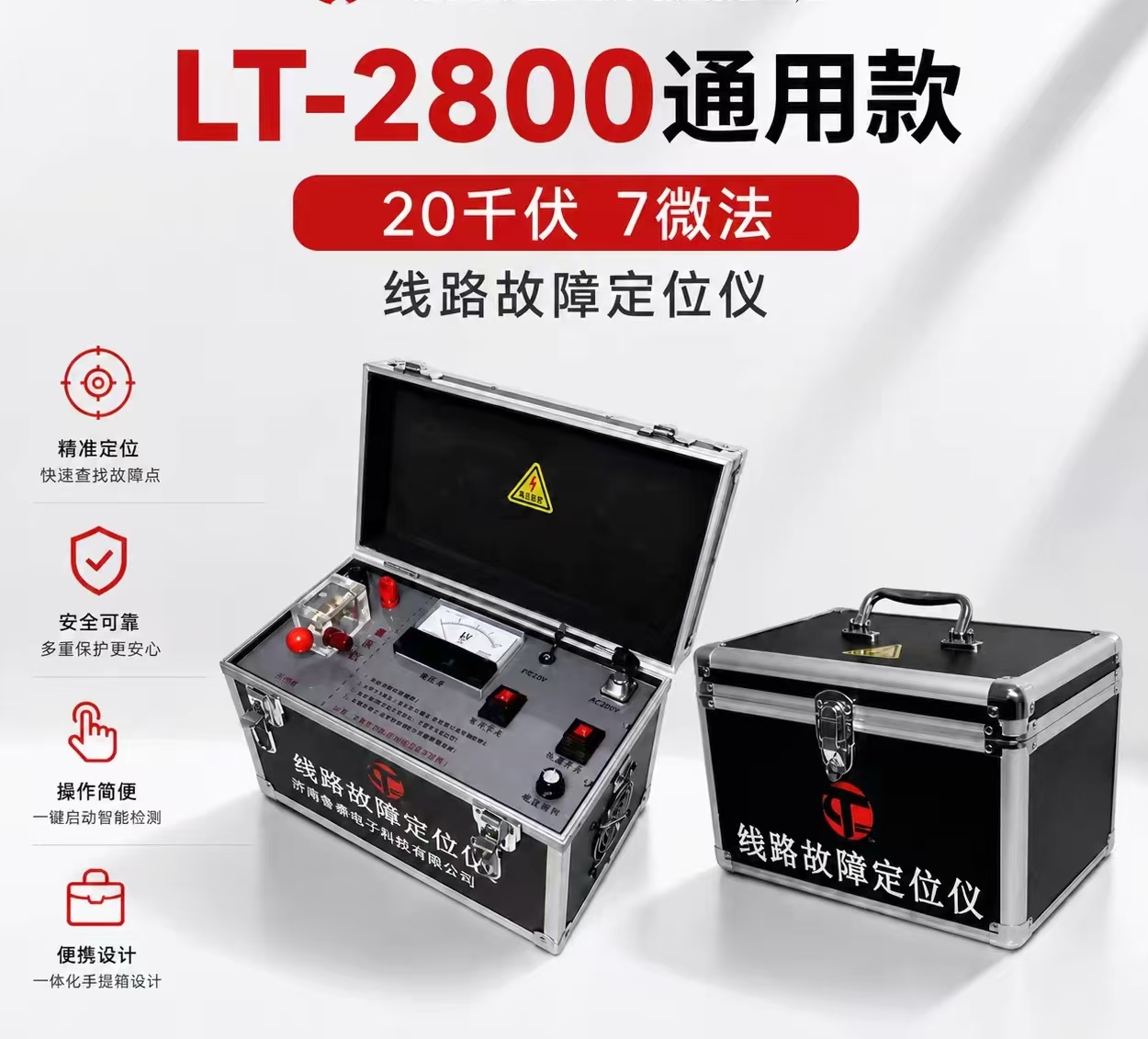
Switch Characteristic Tester
The Switch Characteristic Tester (full name "High-Voltage Switch Mechanical Characteristics Tester", also known as Circuit Breaker Dynamic Characteristics Tester) is a specialized instrument designed to detect the mechanical dynamic characteristics of high-voltage circuit breakers. It integrates a computer, printer, measurement interface circuit, and adjustable DC operating power supply into one unit, using a high-performance industrial embedded platform as the core, combined with displacement sensors and anti-interference technology to withstand strong electromagnetic field interference. It is a core tool for evaluating switch mechanical performance in production inspection, acceptance testing, and preventive testing of high-voltage circuit breakers.
Core Measurement Parameters
The core task of the Switch Characteristic Tester is to accurately measure the following key parameters:
Time Parameters: Closing (Opening) time, reclosing time, three-phase non-simultaneity, same-phase non-simultaneity, bounce time, gold-plated short-circuit time, no-current time
Speed Parameters: Opening speed at contact separation, closing speed at contact touch, maximum speed, average speed
Travel Parameters: Total travel, open distance, overtravel, rebound travel (bounce travel)
Bounce Parameters: Bounce time, bounce count, bounce amplitude
Electrical Parameters: Coil current waveform, coil resistance
Dynamic Curves: Time-travel curve, speed-travel curve, current waveform curve
In simple terms, the Switch Characteristic Tester uses "time" to see if the switch operates promptly, "speed" to see if the action is forceful, "travel" to see if the contact movement is complete, and "bounce" to see if closing is stable.
Working Principle
The Switch Characteristic Tester employs high-speed data acquisition and multi-channel synchronous triggering technology:
Signal Acquisition: Through 12 independent metal contact time channels and displacement sensors (linear sensors, rotary sensors, or acceleration sensors), it synchronously collects time, travel, and speed signals during the opening and closing operations of the circuit breaker.
Operation Control: Built-in isolated adjustable DC power supply (typically DC30~270V continuously adjustable, with instantaneous current up to 20A) directly controls the circuit breaker for opening, closing, reclosing, and other operations.
Data Processing: Using an embedded industrial control platform and high-speed data acquisition technology, time measurement accuracy can reach 0.01ms. A single opening and closing operation can complete synchronous recording of time, travel, speed, and coil current parameters for all breaks.
Result Output: Displays parameter values and dynamic curves on a color LCD touch screen, supporting on-site printing, USB drive export, and PC communication.
To adapt to strong electromagnetic interference environments such as substations, the instrument adopts channel induced voltage discharge protection circuits, floating design, large-area grounding, and digital filtering anti-interference technologies, ensuring reliable use in 500kV and even 800kV substations.
Key Technical Parameters
Table
Download as Table
Export as Image
Parameter Typical Range
Break Test Channels 6~12 independent metal contact time channels
Time Measurement Range 0.01ms ~ 20000ms
Time Measurement Accuracy ±(0.05%t+0.1)ms
Time Resolution 0.01ms (within 200ms)
Speed Measurement Range 0.001 ~ 25.0m/s
Speed Resolution 0.01m/s
Travel Measurement Range Depends on sensor, up to 1000mm
Travel Resolution 0.1mm
Built-in DC Power Supply DC6~270V continuously adjustable, ≤20A (short-term)
Coil Current Measurement 0~30A, resolution 0.01A
Data Storage 60~500 groups
Power Supply AC 220V±10%, 50Hz
Operating Temperature -20℃ ~ +50℃
Relative Humidity ≤90%RH, non-condensing
Weight Approximately 5~12kg
Main Functions
Compatibility with Multiple Switch Types: Can test various voltage levels of high-voltage circuit breakers such as low-oil, multi-oil, vacuum, SF6, as well as GIS combined appliances, pole-mounted switches, contactors, relays, etc.
Multiple Operating Modes: Supports various operation sequences such as single close, single open, close-open, open-close, close-open-close.
Multiple Trigger Methods: Supports internal trigger (instrument issues close/open commands), external trigger (external control energizes the coil), manual trigger, and other trigger methods.
Low-Voltage Operation Test: Using the built-in adjustable DC power supply, it can perform low-voltage operation tests and mechanical life tests on circuit breakers without needing external secondary power on site.
Customizable Speed Definitions: Provides a universal speed definition template, allowing users to edit and save speed definitions for various switch models, with built-in speed definitions for multiple conventional circuit breaker types.
Dynamic Curve Analysis: Can dynamically analyze the relationship between time, travel, and speed at every movement point of the circuit breaker, displaying time-travel curves, speed-travel curves, and current waveform curves.
Data Management: Built-in large-capacity storage, supports USB drive export and RS232 interface for PC communication, and can print all data and motion curves on-site.
Safety Protection Mechanisms
Delay Protection: Automatically cuts off coil voltage after circuit breaker operation to protect both the circuit breaker equipment and the tester.
Induced Voltage Resistance: Test channels have resistance to on-site induced voltage interference, capable of withstanding 15kV induced voltage on site.
Dielectric Strength: Power input to enclosure can withstand 1.5kV for 1 minute withstand voltage test.
Insulation Resistance: >2MΩ
Typical Application Scenarios
Factory Inspection: Detection and verification of mechanical characteristic parameters during circuit breaker production.
Acceptance Testing: Before new circuit breakers are put into operation, verify that mechanical characteristics meet standard requirements.
Preventive Testing: Regularly inspect circuit breakers in operation to assess trends in mechanical performance degradation.
Fault Diagnosis: Targeted testing when circuit breakers experience failures such as refusal to operate, maloperation, abnormal operation times, etc.
Operation Voltage Test: Test the operating characteristics of circuit breakers at different voltages to verify the reliability of the operating mechanism.
Mechanical Life Test: Evaluate the durability and reliability of mechanical components of circuit breakers.
Executive Standards
GB/T 1984-2014: High-voltage AC circuit breakers (current national standard)
DL/T 846.3-2017: General technical conditions for high-voltage testing equipment - Part 3: High-voltage switch comprehensive tester (current industry standard)
GB 10963-1999: Circuit breakers for overcurrent protection for household and similar installations
Main Brands
Domestic Brands: Wuhan Hertz Electric, Nanjing Saihao Electric, Yangzhou Guohua Electric, Wuhan UHV Electric, etc.
Imported Brands: Megger (UK), OMICRON (Austria), Doble (USA), etc.
Compared with several instruments you may know, the positioning of the Switch Characteristic Tester is distinctly different:
Dielectric Loss Tester: Measures tanδ and capacitance of insulating materials, focusing on insulation condition diagnosis.
Transformer Turns Ratio Tester: Measures winding turns ratio and connection group, focusing on winding structure verification.
Loop Resistance Tester: Measures micro-ohm level contact resistance of conductive loops, focusing on conductive connection quality assessment.
High-Voltage Wireless Phase Tester: Measures phase difference and phase sequence of high-voltage lines under live conditions, focusing on phase consistency verification.
Switch Characteristic Tester: Measures mechanical dynamic characteristic parameters of circuit breakers, focusing on mechanical performance evaluation.
The Switch Characteristic Tester is the only instrument dedicated to mechanical motion characteristics, comprehensively evaluating the operating performance of circuit breakers through parameters such as time, speed, and travel. It is a key testing tool for ensuring reliable operation of switchgear in power systems.