Power Comprehensive Analyzer
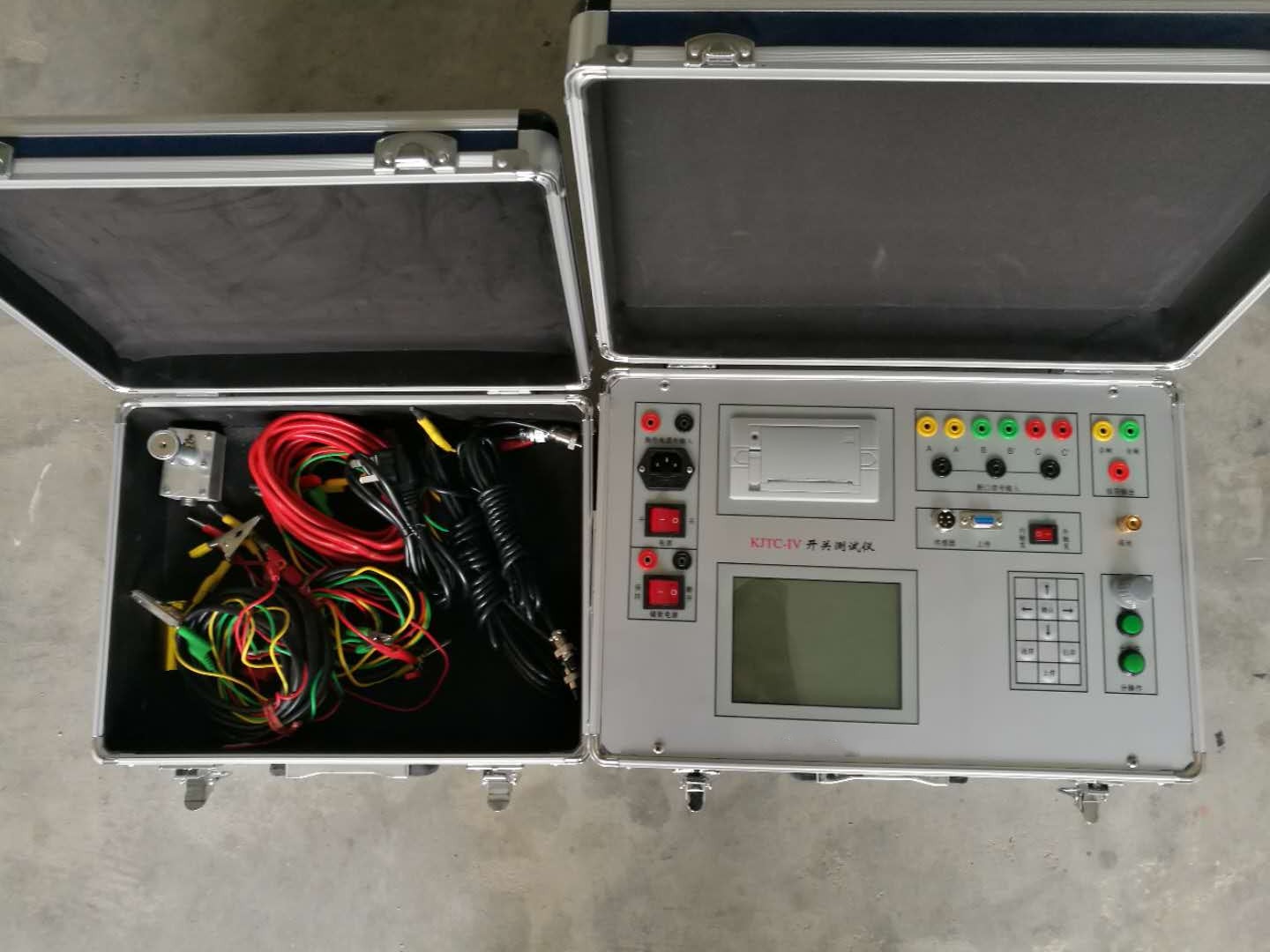
The power comprehensive analyzer (often referred to as a power quality analyzer) is a "general practitioner" for evaluating the quality of power supply and troubleshooting electrical faults. It is mainly used to detect and analyze parameters such as voltage, current, frequency deviation, and harmonics in the power system, helping to locate power quality issues that cause equipment malfunctions or failures.
The following is a detailed introduction to the power comprehensive analyzer:
I. Core Measurement Parameters and Functions
The power comprehensive analyzer can perform long-term data collection and monitoring of power grid operation quality. Its core functions include:
Basic electrical parameter measurement: Accurately measures three-phase voltage, neutral line voltage, three-phase current, neutral line current, frequency, as well as active/reactive/apparent power, power factor, and three-phase electric energy.
Harmonic and flicker analysis: Can measure high-order harmonics up to 50th or even 63rd order, capturing high-order harmonic pollution; also has the capability to measure voltage fluctuation and flicker (short-term/long-term).
Abnormal event capture: Can record transient events such as voltage sags (dips), swells (swells), interruptions, and inrush currents. Some high-end devices can accurately capture nanosecond-level abnormal disturbances.
Three-phase unbalance assessment: Measures the unbalance of three-phase voltage/current and the positive, negative, and zero sequence components to evaluate the system operation status.
Waveform and vector analysis: Built-in digital oscilloscope function for real-time viewing of instantaneous voltage/current waveforms; some devices support real-time vector diagram display for intuitive judgment of the correctness of metering device wiring.
II. Main Technical Features
Modern portable power comprehensive analyzers are highly integrated in design and have the following advantages:
High precision and compliance: Strictly comply with domestic and international standards such as IEC61000-4-30 (Class A/S) and GB/T 14549. The measurement data can be directly used for engineering acceptance, energy efficiency audits, and arbitration of power disputes.
Non-invasive clamp measurement: Current acquisition typically uses clamp-type transformers, allowing safe measurement without disconnecting the current circuit, significantly reducing power outage losses and improving operational safety.
Long battery life and portable design: Built-in high-performance lithium battery, can work continuously for more than 8 hours on a full charge; compact size and lightweight, some devices adopt lightweight design and support protection standards such as IP54, suitable for outdoor and substation harsh environments.
Massive storage and intelligent analysis: Supports SD card expansion, enabling continuous monitoring for several months; comes with professional backend analysis software that supports one-click generation of compliance reports, trend curve plotting, and harmonic spectrum analysis.
III. Core Application Scenarios
Power comprehensive analyzers are widely used in power systems and various industrial fields:
Power system: Power quality acceptance of substations, harmonic survey of distribution networks, fault traceability analysis.
Industrial enterprises: Harmonic detection of nonlinear loads such as motors, frequency converters, and UPS, power quality assessment of production equipment, and verification of reactive power compensation devices.
New energy stations: Power quality compliance testing during grid connection of distributed new energy sources such as photovoltaic and wind power, and inverter efficiency evaluation.
Critical load protection: Power quality monitoring and complaint investigation for key facilities such as data centers, hospitals, rail transit, and commercial buildings.
IV. Selection and Usage Precautions
Clarify accuracy and standard requirements: If used for issuing formal test reports or acceptance, it is necessary to focus on whether the equipment complies with national standards (GB) or IEC 61000-4-30 Class A standards, ensuring that fundamental voltage error and harmonic measurement accuracy meet requirements.
Pay attention to measurement range and channels: Choose appropriate voltage range (e.g., 0~1000V) based on the on-site voltage level; if monitoring multiple DC circuits or special signals is required, confirm whether the device supports channel expansion.
Software ecosystem and usability: Excellent power quality analysis not only relies on hardware but also requires examining the functions of the accompanying PC software (such as automatic report generation, historical data comparison, etc.), as well as whether the host has a Chinese interface and intuitive trend chart (AutoTrend) display.
Safety and protection: On-site operations must ensure that the equipment has sufficient safety levels (such as 600 V CAT IV/1000 V CAT III), and check the insulation resistance between the input terminals and the housing, as well as the power frequency withstand voltage indicators, to ensure operator safety.