

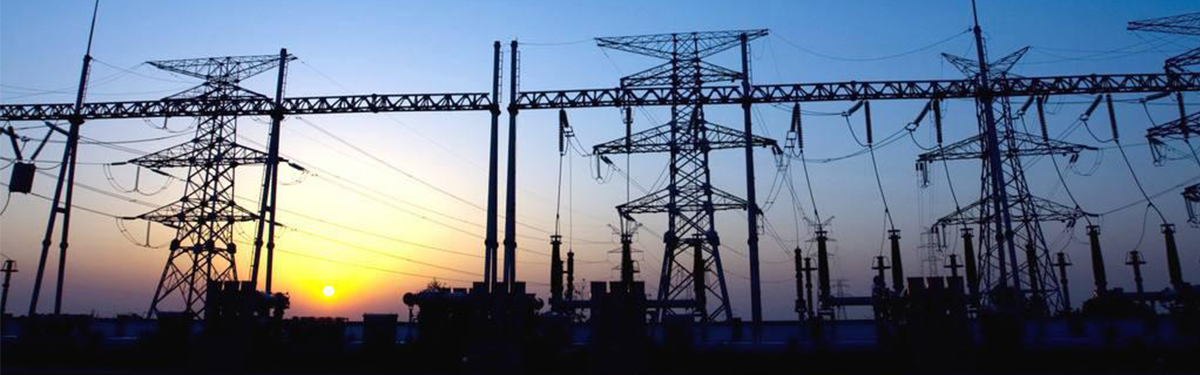
At substations or industrial power distribution sites, engineers need to continuously record steady-state indicators such as voltage deviation, frequency deviation, harmonics, and three-phase unbalance to assess whether power supply quality meets assessment requirements. Such tasks impose clear requirements on the measurement accuracy and long-term stability of instruments.
According to GB/T 19862-2016 "General Requirements for Power Quality Monitoring Equipment," power quality analyzers should continuously measure the above steady-state indicators. This standard specifies measurement methods, accuracy, and data statistics methods, providing a unified basis for equipment selection and on-site comparison.
From the parameter perspective, the IEC 61000-4-30 power quality analyzer has voltage and current accuracy of Class 0.5, power accuracy of Class 1.0, and a grid frequency measurement range covering 10–80 Hz. These indicators determine the credibility of the instrument in fundamental and harmonic measurements and also affect the calculation results of derived parameters such as three-phase unbalance.
In field applications, continuous monitoring often lasts from several hours to several days, and the instrument's sampling synchronization method and data storage strategy directly affect record integrity. When selecting equipment, engineers can match it according to the wiring mode of the monitoring point, the harmonic order range, and the later data export format, avoiding rework caused by insufficient range or storage.
Compared with portable power quality analyzers, fixed-installation analyzers place greater emphasis on long-term operational stability and communication interface compatibility. When the accuracy classes of the two types of equipment are similar, selection differences are mainly reflected in installation method, power supply conditions, and data access capability, which need to be weighed according to the actual monitoring scenario.
